
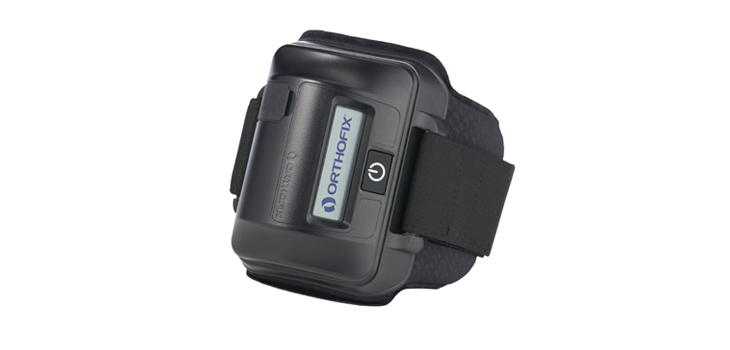
In early March, Orthofix International N.V. announced the 38th FDA Supplemental Approval for its next-generation Physio-Stim bone growth stimulator.
38th Supplemental Approval for Orthofix’s Physio-Stim
1 min read Premium comments
#fdaSecondary#bonegrowthstimulator#fusion
The FDA granted the original Approval for the device in 1986.
Approval Order Statement
The Approval Order Statement, according to the FDA, is “for updates to the STIM onTrack mobile application for compatibility with Android OS. The optional mobile application is identical in functionality to the previously approved iOS version. The application is compatible with the CervicalStim Model 5505, SpinalStim Model 5212, and PhysioStim Models 5302, 5303, 5313, 5314, and 5315.”
Along with the FDA approval, the company also announced CE Mark approval.
Pulsed Electromagnetic Field
The company says its Physio-Stim devices “provide a non-surgical treatment option for patients who have a nonunion fracture to an extremity that has shown no visible signs of healing. These Class III medical devices use a pulsed electromagnetic field (PEMF) signal to induce a low-level electrical field at the fracture site which stimulates bone healing.”
According to the company, the Physio-Stim device has an “overall clinical success rate of 80% (up to 88% for fracture gaps less than 3mm), [and] has high success rates for treating nonunion fractures.”
Brad Niemann, president of the company’s BioStim strategic business unit, said these devices “…are built on our proprietary PEMF technology platform. Together with our spinal fusion stimulators, they are currently the No. 1 prescribed bone growth stimulators in the U.S.”
Author
React:
Discussion
This is a fascinating development. In my practice we've seen similar outcomes with the revised protocol. The key differentiator seems to be patient selection criteria. Has anyone else noticed the correlation with BMI thresholds?
Great point. I'd push back slightly on the conclusion, the sample size in the cited study is too small to draw population-level inferences. That said, the directional signal is compelling and worth a larger RCT.
We implemented a similar approach last year. Early results are promising but we're still gathering 12-month follow-up data. Happy to share our protocol if anyone is interested.
Join the conversation
Orthopedic professionals are discussing this. Sign in and upgrade to read every comment and add your voice.