
And the surgeon survey says…it’s downright difficult to pinpoint the key parts for a given procedure.
Trouble Defining Key Parts of Surgery? You Are Not Alone
2 min read Premium comments
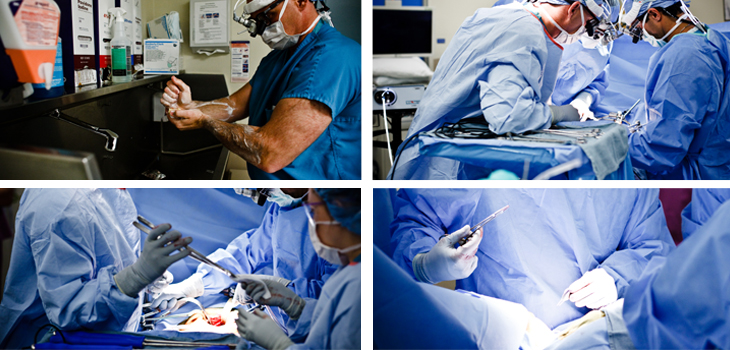
#kneereplacementSecondary#hipsurgery#surgery#hip
New multicenter research, “Defining the Key Parts of a Procedure: Implications for Overlapping Surgery,” was published in the February 15, 2018 edition of the Journal of the American Academy of Orthopaedic Surgeons.
The authors wrote, “The American College of Surgeons’ Statements on Principles requires attending surgeons to be present for the ‘key parts’ of surgical procedures, but the term is not defined.
“The research question addressed in this study is whether a functional definition of the critical or key steps of common orthopaedic surgical procedures can be reliably constructed. We used the examples of hip and knee arthroplasty because these procedures are highly structured and divisible into distinct subroutines.”
Co-author on the study, Joseph Bernstein, M.D. with Department of Orthopaedic Surgery at the University of Pennsylvania in Philadelphia, commented to OTW, “The Boston Globe’s article got everybody’s attention—rightly so. Our specific interest was to help ensure that the inevitable response would be as evidence-based as possible. In particular, we believed—and confirmed—that defining ‘key parts’ is harder than it seems.”
“We are very grateful to our many colleagues around the country who responded to our survey. We got nearly 400 responses to a single solicitation, allowing us to limit our analysis to orthopaedic surgeons with a lot of experience: board certified physicians, with more than 100 joint replacement cases under their belt.”
“At the present time, defining the key parts for a given procedure must rely on the operating surgeon’s discretion. We demonstrated that imposing a single surgeon’s standard on others is not the optimal approach, because such a standard is likely to be idiosyncratic. We need a consensus definition.”
“The orthopaedic surgery community should get together to define a consensus standard. At the least, this consensus standard can serve as a safe-harbor: if surgeons abide by this standard, they are protected from the charge that they were absent for the key part of the case.”
“Orthopaedic surgeons thinking to themselves, ‘Geez, I am having a tough time defining the key parts of surgery,’ should know that they are not alone.”
Author
React:
Discussion
This is a fascinating development. In my practice we've seen similar outcomes with the revised protocol. The key differentiator seems to be patient selection criteria. Has anyone else noticed the correlation with BMI thresholds?
Great point. I'd push back slightly on the conclusion, the sample size in the cited study is too small to draw population-level inferences. That said, the directional signal is compelling and worth a larger RCT.
We implemented a similar approach last year. Early results are promising but we're still gathering 12-month follow-up data. Happy to share our protocol if anyone is interested.
Join the conversation
Orthopedic professionals are discussing this. Sign in and upgrade to read every comment and add your voice.