
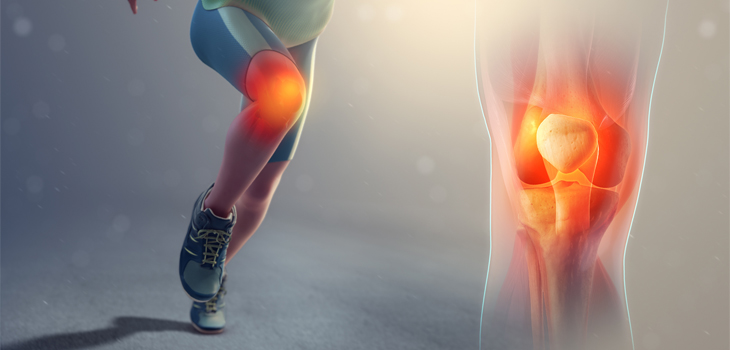
According to a Baylor College of Medicine expert those seeking relief from sports-related injuries due to conditions like osteoarthritis of the knee, partial rotator cuff tears, joint and tendon injuries, or tennis elbow may find it in a fat-derived stem cell injection.
Stem Cell Injections Treating Sports-Related Pain
1 min read Premium comments
Secondary#stemcells#sportsrelatedpain
“With this treatment, I can tackle a number of non-operative sports and musculoskeletal injuries,” said Prathap Jayaram, M.D., director of regenerative sports medicine and assistant professor of physical medicine and rehabilitation at Baylor.
“Some patients who may be candidates for a stem cell-derived injection are those with partial tears of a rotator cuff and knee osteoarthritis. There is an increasing body of evidence to support regenerative strategies that are beneficial for patients with joint and tendon injuries,” he said.
Jayaram, who trained at Stanford’s noted orthopedics department, offers an alternative—a non-operative procedure that can have patients in and out in one day. There are two types of stem cell-derived treatments available, he noted. In addition to the fat-derived stem cell therapy, a bone marrow stem cell therapy also is available.
“Unlike the bone marrow stem cell therapy, which has been available for some time, the fat-derived stem cell therapy can be gathered from an individual using minimally invasive techniques with minimal side effects. This treatment helps modulate the inflammatory profile in the joints and optimizes the patient’s own regenerative potential to help alleviate pain and improve function.” said Jayaram.
Often, patients will try repeated steroid injections which have limitations. Although steroids are great for acute pain, Jayaram said that over time, steroid injections can be more degenerative than regenerative at the tissue level and are not the best long-term option. “Certainly steroids still have a place, and I still inject steroids for acute pain where it’s indicated, but I don’t use it as a long-term strategy,” he said. This treatment has been FDA approved and is safe for patients, Jayaram said.
Author
React:
Discussion
This is a fascinating development. In my practice we've seen similar outcomes with the revised protocol. The key differentiator seems to be patient selection criteria. Has anyone else noticed the correlation with BMI thresholds?
Great point. I'd push back slightly on the conclusion, the sample size in the cited study is too small to draw population-level inferences. That said, the directional signal is compelling and worth a larger RCT.
We implemented a similar approach last year. Early results are promising but we're still gathering 12-month follow-up data. Happy to share our protocol if anyone is interested.
Join the conversation
Orthopedic professionals are discussing this. Sign in and upgrade to read every comment and add your voice.