
New Study Delivers Surprise Outcome of Posterior vs Anterior Scoliosis Test
Posterior or Anterior for Scoliosis? Surprising New Answer; How Does RA Affect Sagittal Alignment?; Study: First Systematic Review of Anterior vs. Posterior in THA
6 min read Premium comments
#spine#totalhiparthroplasty#rheumatoidarthritis#hiplenkecurve
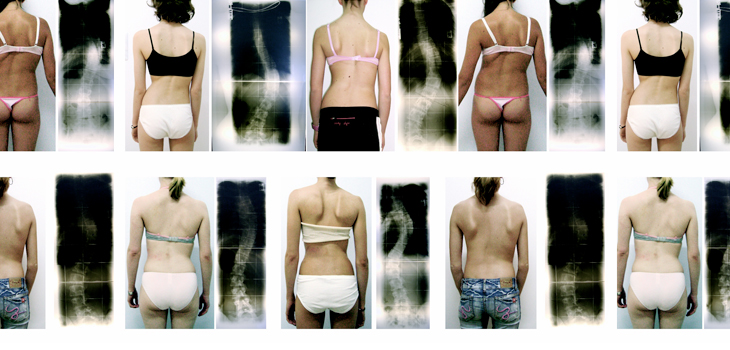
Posterior or anterior approach for Lenke 5C curves? Easy answer, right? Not so fast. A new study–titled “A Detailed Comparative Analysis of Anterior Versus Posterior Approach to Lenke 5C Curves”—is appearing in the March 1, 2018 edition of Spine that delivers some surprising new insights into this simple question—but complex issue.
The authors wrote, “Historically, ASIF [anterior spinal instrumented fusion] has been the treatment of choice for treatment of thoracolumbar adolescent idiopathic scoliosis. More recently, PSIF [posterior spinal instrumented fusion] has gained popularity for its ease, versatility, and amount of correction achieved. Current literature lacks a prospective comparative analysis between these two approaches to better aid treating surgeons in decision making when treating Lenke 5C curves.”
Firoz Miyanji, M.D., clinical associate professor in the Department of Orthopedics at the British Columbia Children’s Hospital in Vancouver, British Columbia, Canada, and co-author on the study, told OTW, “Clinically, we were seeing some curves (thoracolumbar, Lenke 5s) that although treated posteriorly with pedicle screw constructs and Ponte releases still had some degree of trunk shift that questioned whether or not they should have had a longer fusion by at least 1 (or more) levels.”
The authors wrote, “A prospective, longitudinal multicenter adolescent idiopathic scoliosis database was used to identify 161 consecutive patients with Lenke 5C curves treated by ASIF with a dual rod system, or PSIF with a pedicle screw-rod construct. Pre- and 2-year postoperative radiographic data, Scoliosis Research Society outcome scores, and perioperative comparisons were made between the two approaches…A total of 69 patients were treated with ASIF and 92 patients with PSIF.”
“Yes, the study is an international, multicenter study for which the data, although analyzed in a retrospective manner, was prospectively collected over many years. This adds validity to the findings and allow the results to be more generalizable than simply originating from one, single center.”
“The most important results were that these particular curves (i.e., thoracolumbar curves, Lenke 5) if treated from an anterior approach, continue to result in shorter fusions compared to being treated from a posterior approach. However, the sagittal profile (restoring lumbar lordosis) and rotational correction (lumbar prominence) were better in those patients that had a posterior approach.”
“When choosing fusion levels in these curves (Lenke 5), one cannot apply the same ‘rules’ as an anterior approach if treating these curves posteriorly. The surgeon may need to go longer distally if treating these curves from a posterior approach—not always, but in some, select cases. Other items need to be considered in the decision making process of fusion level selection, particularly the lowest instrumented vertebra.”
“There still remains a role for anterior surgery in patients with Lenke 5 curves and the decision to treat these from either an anterior or posterior approach should be made individually for that particular patient.”
How Does RA Affect Sagittal Alignment?
In order to better manage low back pain and spinal sagittal alignment in rheumatoid arthritis (RA) patients, researchers from Japan undertook a detailed study. Their work, “Factors influencing spinal sagittal balance, bone mineral density, and Oswestry Disability Index outcome measures in patients with rheumatoid arthritis,” was published in the February 2018 edition of the European Spine Journal.
Co-author Kazutaka Masamoto, M.D., with the Department of Orthopaedic Surgery Kyoto University in Japan, told OTW, “Our group tried to develop a safe strategy for the surgery for atlanto-axial subluxation and vertical subluxation in using Mergel’s transarticular screw. But after the advent of bio-DMARDs [disease-modifying anti-rheumatic drugs] and MTX [methotrexate], cervical deformities associated with RA have dramatically decreased. This problem requires cooperation between rheumatologists and spine surgeons.”
The authors wrote, “We enrolled 272 RA patients to identify the factors influencing sagittal vertical axis (SVA). Out of this, 220 had evaluation of bone mineral density (BMD) and vertebral deformity (VD) on the sagittal plane; 183 completed the ODI [Oswestry Disability Index] questionnaire. We collected data regarding RA-associated clinical parameters and standing lateral X-ray images via an ODI questionnaire from April to December 2012 at a single center. Patients with a history of spinal surgery or any missing clinical data were excluded.”
“Multivariate regression analysis showed that larger SVA correlated with older age, higher DAS28-ESR [disease activity score 28 erythrocyte sedimentation rate], MTX nonuse, and glucocorticoid use. Lower BMD was associated with female, older age, higher DAS28-ESR, and MTX nonuse. VD was associated with older age, longer disease duration, lower BMD, and glucocorticoid use. Worse ODI correlated with older age, larger PI-LL [pelvic incidence-lumbar lordosis] mismatch or larger SVA, higher DAS28-ESR, and glucocorticoid use.”
Dr. Masamoto commented to OTW, “In our country, RA is still an important field in orthopaedic surgery. And orthopaedic surgeons themselves take part in the control of RA. This study could be accomplished because of such backgrounds. We found that steroid intake has a bad influence on ODI, and MTX use has good effect on BMI. To improve low back pain in RA patients, a lot of aspects have to be taken into consideration.”
First Systematic Review of Anterior vs. Posterior in THA
In the first systematic review of prospective studies comparing outcomes through 90 days of anterior approach posterior approach in primary total hip arthroplasty (THA), researchers found that the anterior approach resulted in less pain, better hip functioning, and a decreased need for narcotics.
The study, “Does Surgical Approach Affect Outcomes in Total Hip Arthroplasty Through 90 Days of Follow-Up? A Systematic Review with Meta-Analysis,” will appear mid-2018 in the Journal of Arthroplasty.
Larry E. Miller, Ph.D. is with Miller Scientific Consulting in Asheville, North Carolina. Dr. Miller, and a co-author on the study, commented to OTW, “Dr. Samir Bhattacharyya from DePuy Synthes approached me to take a closer look at the published literature on anterior approach hip arthroplasty.”
“After a number of evidentiary and methodology-oriented conversations, it was apparent to both of us that it would be of great interest for patients, providers, and surgeons to know how anterior approach helps patients during short term recovery, specifically in terms of pain relief and improved functioning. The impact of better patient outcomes in the short-term may result in significant societal and economic benefits.”
“Although several systematic reviews had previously investigated differences in patient outcomes with anterior approach vs. posterior approach in hip arthroplasty, all of these reviews included a mixture of prospective and retrospective studies. The novel aspect of our study was that it was the first systematic review on the topic to include only prospective comparative studies, which translates to higher methodological quality and reproducible results.”
“Patients treated with the anterior approach reported less pain, lower narcotic usage, and better hip function in the first 90 days after surgery compared to patients who underwent hip arthroplasty using posterior approach. These differences were statistically significant, clinically important, and therefore the potential positive impacts on patients’ and caregivers’ lives should not be overlooked. We were also interested in whether there were any differences in complication rates between the anterior and posterior approach. Overall, we found no significant differences between approaches in complication rates over 90 days following the procedure.”
“Total hip replacement is a significant event in patient’s lives. Dr. Bhattacharyya and I discussed and agreed that choosing to undergo total hip arthroplasty could be one of the most involved decisions a patient and his or her family can make. He correctly pointed out that the experience from the short-term recovery from the surgery may have prolonged impact on patients’ quality of life and mobility. This paper shows improved functioning and less pain along with less narcotic use within 90 days post-surgery. As adoption of the anterior approach continues to increase, it is critical for surgeons and patients to understand the benefits and limitations of all total hip arthroplasty surgical approaches and to collectively make informed decisions based on the highest quality clinical evidence.”
“This study builds on the mounting evidence that the anterior approach improves patient outcomes with total hip arthroplasty, optimizes the patient experience, and likely reduces the overall cost of perioperative care. In a cost-constrained healthcare system, the anterior approach may benefit patients (better outcomes), their caregivers (smaller caregiving burden), and providers (lower perioperative costs).”
Author
React:
Discussion
This is a fascinating development. In my practice we've seen similar outcomes with the revised protocol. The key differentiator seems to be patient selection criteria. Has anyone else noticed the correlation with BMI thresholds?
Great point. I'd push back slightly on the conclusion, the sample size in the cited study is too small to draw population-level inferences. That said, the directional signal is compelling and worth a larger RCT.
We implemented a similar approach last year. Early results are promising but we're still gathering 12-month follow-up data. Happy to share our protocol if anyone is interested.
Join the conversation
Orthopedic professionals are discussing this. Sign in and upgrade to read every comment and add your voice.