
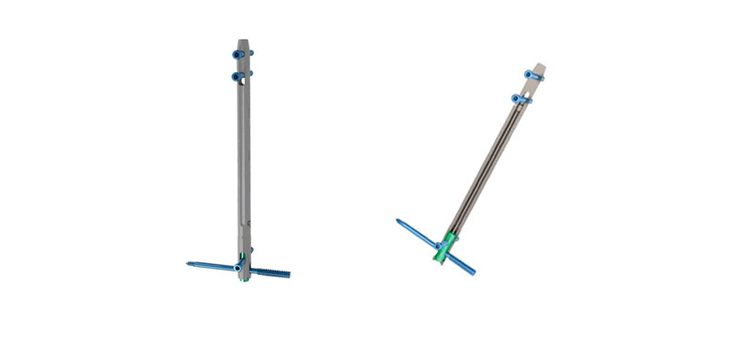
MedShape, Inc. is announcing the first surgeries using the DynaNail XL TTC Fusion System.
Longer DynaNail Expands Indications
2 min read Premium comments
Secondary#dynanail#medshape#nitinol#foot
According to the company, “The DynaNail XL represents the longer counterpart to the already commercially available DynaNail, the only internal fixation system that uses patented superelastic nickel titanium (NiTiNOL) technology to maintain post-operative active compression like an external fixator and offer immediate dynamization.”
“In concert with the launch of the DynaNail XL, MedShape also introduced the Quick Compress Technique, a streamlined surgical approach that can be used as a substitute to the standard technique.”
“Because the DynaNail is able to maintain compression for up to 6 mm of resorption or settling, a surgeon can bypass manual compression with the Quick Compress technique, thereby eliminating surgical steps and reducing OR time. The new technique also offers the option of continued dynamization once the NiTiNOL Element has fully recovered.”
Gregory Neely, M.D., an orthopedic foot and ankle surgeon with Sanford Health in Sioux Falls, South Dakota, was one of the first surgeons to implant a DynaNail XL.
MedShape quoted him in the press announcement as saying: “I am excited to have the DynaNail XL available as an option for my TTC [tibiotalocalcaneal] fusion surgeries. The variability in size without changing technique or set up in the operating room expands this product’s utility. I am pleased with the outcomes from my first XL patient so far.”
“The original DynaNail’s post-operative compression capabilities have always given me confidence that I can achieve fusion in even the most challenging hindfoot cases. Now with the variable length offerings, I can apply this unique technology to more of my patient population including those with post-traumatic deformity, previous hardware stress risers, and individuals with a larger frame where increasing the working length of the device likely improves stability.”
CEO, Kurt Jacobus told OTW, “The most exciting aspect of the DynaNail XL release is that the longer length offerings now expand the clinical indications by which surgeons might choose DynaNail as their treatment option, allowing more patients to potentially receive this innovative compression-sustaining technology.”
“With the expanded surgical indications for the DynaNail and the release of the Quick Compress Technique, we anticipate continued market growth of the DynaNail throughout the year. We also look forward to sharing more of the successful clinical outcomes we are seeing with DynaNail and validating these results with a number of clinical studies at leading academic-based foot and ankle orthopaedic centers. Lastly, MedShape plans to leverage the NiTiNOL capabilities first developed with the DynaNail to release two new NiTiNOL-based products over the course of the next year.”
Author
React:
Discussion
This is a fascinating development. In my practice we've seen similar outcomes with the revised protocol. The key differentiator seems to be patient selection criteria. Has anyone else noticed the correlation with BMI thresholds?
Great point. I'd push back slightly on the conclusion, the sample size in the cited study is too small to draw population-level inferences. That said, the directional signal is compelling and worth a larger RCT.
We implemented a similar approach last year. Early results are promising but we're still gathering 12-month follow-up data. Happy to share our protocol if anyone is interested.
Join the conversation
Orthopedic professionals are discussing this. Sign in and upgrade to read every comment and add your voice.