
Don’t forget about the immunological component of pain and other outcome measures that are important to patients, says new work from Canada. The study, “Monocyte activation is elevated in women with knee-osteoarthritis and associated with inflammation, BMI and pain,” is published in the November 8, 2017 edition of Osteoarthritis and Cartilage.
Leukocytes Correlate With Pain in OA Patients
2 min read Premium comments
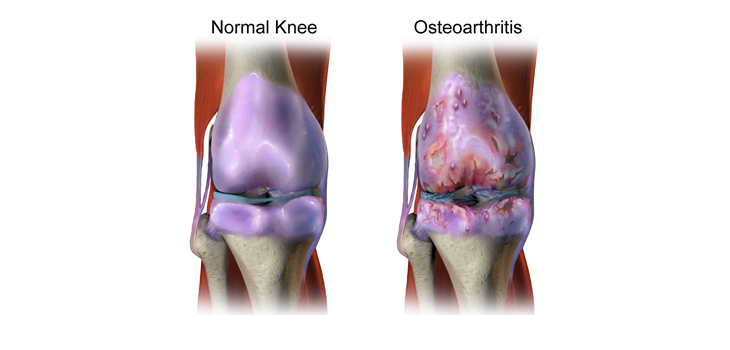
#osteoarthritisSecondary#knee#inflamation
Dawn Bodish, Ph.D., associate professor of Pathology and Molecular Medicine at McMaster University in Hamilton, Ontario, Canada and co-author on the research, told OTW, “My colleague, Dr. Monica Maly, had been studying osteoarthritis (OA), specifically knee osteoarthritis, in post-menopausal women. I study the aging immune system, and specifically how monocyte development and function changes with age. We knew that age and body mass index (BMI) altered monocytes and we knew that changes in monocytes often occur in the context of other chronic inflammatory conditions such as cardiovascular disease.”
“Over coffee one day we realized that there were very few studies that characterized how monocyte phenotype and function changed in women with osteoarthritis. We realized that we had the perfect population to disentangle immune changes how age, BMI and osteoarthritis alter monocytes.”
“We found that there were fewer monocytes in the circulation of women with osteoarthritis, probably because they were expressing a key receptor, CCR2, which is believed to be required for homing to the joint. They were also more ‘activated,’ meaning that they were primed to respond to inflammatory responses. The most interesting aspect of the study was that this homing ability correlated with pain, which we hypothesize is a result of their increased ability to move to the joint and contribute to inflammation.”
“From a scientist’s perspective, the most interesting aspect was that our study was consistent with animal models and previous studies demonstrating that monocyte migration to the inflamed joint was a mediator of disease severity. From a patient perspective, identifying that the correlation between pain and the presence of these cells is important since it highlights a new target for intervention.”
“Measuring changes in monocyte numbers and activation status may be a useful proxy for clinical trials testing interventions as monocytes can change in as little as 2-3 weeks. The other practical intervention might be that targeting inflammatory monocytes may be a novel strategy for reducing pain.”
“Measuring changes in circulating leukocytes rather than the soluble immune factors in serum is generally more informative as there is less variability between individuals. Although the role of the immune system in joint destruction is well established, it’s easy to forget the immunological component of pain, mood and other outcome measures which are meaningful to patients. Immunological studies are challenging to do because of patient heterogeneity but when patients and healthy controls are very well characterized, even small studies can be extremely informative.”
Author
React:
Discussion
This is a fascinating development. In my practice we've seen similar outcomes with the revised protocol. The key differentiator seems to be patient selection criteria. Has anyone else noticed the correlation with BMI thresholds?
Great point. I'd push back slightly on the conclusion, the sample size in the cited study is too small to draw population-level inferences. That said, the directional signal is compelling and worth a larger RCT.
We implemented a similar approach last year. Early results are promising but we're still gathering 12-month follow-up data. Happy to share our protocol if anyone is interested.
Join the conversation
Orthopedic professionals are discussing this. Sign in and upgrade to read every comment and add your voice.