
Johnson & Johnson’s DePuy’s orthopedics business is in court defending itself against charges that the company sold implants which it allegedly knew, or should have known, would result in higher than average rates of revision surgery.
Lawsuit Over Alleged “Debonding” Hits DePuy’s ATTUNE Knee
6 min read Premium comments
#kneereplacement#depuysynthes#attunekneesystem
DePuy is responding with data from the UK and Australia registries which shows 99% survivorship at four years.

The issues surfaced when a patient alleging a failed ATTUNE knee implant filed a lawsuit on December 11, 2017 in the U.S. District Court for the Southern District of Mississippi (Joyce Rogers v. DePuy Synthes Sales, Inc. et al, Case No. 3:17-cv-996-DPJ-FKB.)
In a nutshell, the plaintiff in this case is alleging that some of the ATTUNE knees were failing due to debonding of the tibial baseplate. The company has since redesigned the ATTUNE and is replacing it with the Attune S+.
As in the metal-on-metal hip cases, the plaintiffs are saying that the company knew about problems but didn’t warn surgeons and patients about them even as they were working on an internal fix.
In other words, what did the company know and when did they know it?
The Attune Genesis
Let’s start at the beginning.
DePuy Orthopaedics Inc., introduced the LCS Complete Knee System in 1984, with a reported 92.6% survivorship at 15 years. Building on that, the company introduced the P.F.C. SIGMA System in 1996. According to documents in the Rogers lawsuit, the SIGMA system demonstrated 99.6% survivorship at 7 years.
The SIGMA became one of the most widely used total knee replacement systems in the world.
The company further refined their knee replacement system and came up with the ATTUNE system and received FDA 510(k) clearance for the implant in December 2010. The basis for FDA clearance was “substantial similarity to several prior devices, including, but not limited to the P.F.C. SIGMA Knee System.”
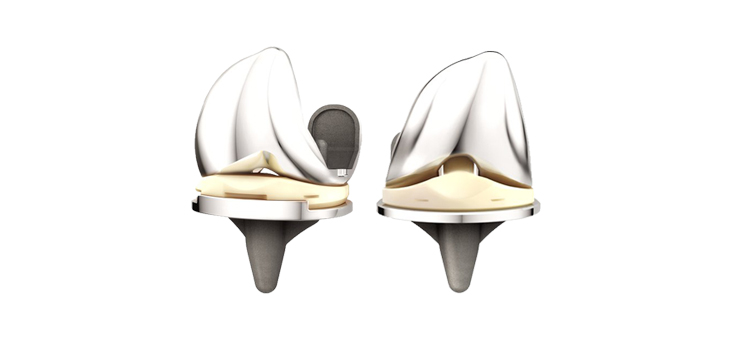
The new system, according to plaintiff lawyers, “purported to feature a gradually reducing femoral radius [with] an innovative s-curve design including a tibial baseplate that was redesigned at the keel from the SIGMA.” Defendant claims the baseplate is defective and failed.
The ATTUNE was introduced in March 2013 at the American Academy of Orthopedic Surgeons (AAOS) annual meeting in Chicago. The company reported that the $200 million project was one of the largest research and development projects in the history of the DePuy Synthes Companies.
The company eventually sold around 400,000 of the devices worldwide.
One of those first 400,000 recipients of the ATTUNE was Joyce Rogers of Meridian, Mississippi, who got her implant on February 2, 2015. She required a revision surgery on November 30, 2016 at the University of Mississippi Medical Center.
Safety Issues – Debonding
Rogers claims her device’s failure was due to mechanical loosening. The loosening was caused by a failure of the bond between the tibial baseplate at the implant-cement interface.
Rogers also claims that DePuy became aware of the safety issues with the ATTUNE beginning in 2013 and 2014. Those concerns, according to her suit, were disclosed in failure reports submitted to and kept in the FDA’s Manufacturer and User Facility Device Experience (MAUDE), database.
Because of these safety issues, claims Rogers, the company went to the FDA in March 2016 with a 510(k) premarket notice of intent to market the ATTUNE Revision Knee System (Attune S+), which included a new stem, with added length and a keel for additional stability and recessed cement pockets intended to promote cement fixation. The FDA granted clearance for the revision system on June 15, 2017.
At the 2017 AAOS meeting in San Diego, the company announced the launch of the first ATTUNE revision system.
According to the lawsuit, “This strategic decision to design and launch a newly designed tibial baseplate is an admission, or at the very least strong evidence, that the original ATTUNE Tibial Tray (baseplate) is defective and prone to failure. However. Defendants have not recalled the defective tibial baseplate or informed consumers and surgeons about the dangers of its use.”
Rogers alleges that DePuy knew about the design defects and resulting failures with the original, “long before the newly designed tibial baseplate (ATTUNE S+) was cleared in June 2017, yet they failed to share this information with orthopedic surgeons using the ATTUNE devices. In fact, the application IBR approval for the ATTUNE S+ was submitted by DePuy to the FDA on March 16, 2016, and many surgeons are still in the dark about the new and improved ATTUNE design.”
We found a Class 2 Device Recall initiated by the company on June 12, 2015 for the ATTUNE Articulation Surface. According to the FDA filing, the recall was issued due to: “Potential for the Balseal, a small wire spring coil located on the post feature of the ATTUNE Knee Tibial Articulation Surface Instruments used in trialing to become damaged and disassociate (come off). If the Balseal is separated from the post, it has the potential to enter the surgical site and be left in the patient if the surgeon is unaware of the disassociation.”
Bonutti Study
A study published in the June 2017 Journal of Knee Surgery (“Unusually High Rate of Early Failure of Tibial Component in ATTUNE Total Knee Arthroplasty System at Implant–Cement Interface,” Peter M. Bonutti, Anton Khlopas, Morad Chughtai, Connor Cole, Chukwuweike U. Gwam, Steven F. Harwin, Brent Whited, Didi E. Omiyi, Joshua E. Drumm), highlighting 15 cases of loosening (within two years) from hospital databases and another 21 cases in the FDA’s MAUDE database. (https://www.thieme-connect.de/products/ejournals/html/10.1055/s-0037-1603756#N68524)
The study notes that loosening of cemented tibial components is typically rare at short-term follow-up and theorizes that the ATTUNE loosening may be caused by increased constraint, reduced cement pockets, changed surface roughness vs. earlier knee designs, and/or reduced rotational stabilizers.
While pointing out that the system initially showed good early outcomes in a prospective study after 2-year follow-up, the authors wrote, “However, in our experience of three community hospital centers, we have encountered an unusually high rate of early aseptic failures as a result of failure of implant–cement interface.”
Needham & Co. analyst Mike Matson wrote on February 7, 2018, that his analysis of FDA MAUDE reports indicates that there were 5-6x as many reports of loosening with ATTUNE in 2017 than either Stryker’s Triathlon or Zimmer Biomet’s Persona knees.
DePuy’s Response
DePuy responded to the Bonutti study by pointing to registry data showing low revision rates. For instance, the company pointed out that ATTUNE has a 98.7% survivorship rate at four years in the England/Wales/Northern Ireland joint registry vs. 98.1% for the overall class and a 99.5%+ survivorship at one year in the Australian joint registry vs. 99.0% for the overall class.
The company also noted that the patients in the article had an average body mass index (BMI) of 35 and that tibial loosening is more common among higher BMI patients.
So, there it stands. A patient claiming the company continued to sell a device which they allegedly knew had problems, but failed to issue a warning or recall, and a company claiming they went through the proper regulatory hurdles and blamed surgical techniques and overweight patients for problems with the device.
While it’s arguable that the original ATTUNE knee replacement system failed at unacceptable rates and the company moved quickly to get a revision system to the market, there is even more disagreement over what the company knew, when they knew it, and did it take steps to adequately warn surgeons and patients about the failure rates?
Plaintiff’s attorneys did not submit evidence in the lawsuit with any internal company smoking gun documents. We reached out to Rogers’ legal team but had not received a reply as of this writing.
Juries and Surgeons
Those legal questions will have to be decided by a yet unseated jury in Mississippi.
The more immediate question for DePuy is what will the jury of its knee surgeon customers decide to do?
Needham analyst Matson speculates that the concern about ATTUNE’s tibial loosening may benefit the knee businesses of Smith & Nephew (SNN), Stryker Corporation (SYK) and Zimmer Biomet Holdings (ZBH). He wrote that surgeons concerned about tibial loosening with ATTUNE have several options.
First, they can continue to use ATTUNE and switch over to the new ATTUNE S+, which has not yet had enough time to determine if the new design has solved the loosening problem.
Second, they can revert back to one of DePuy’s older knee brands.
Third, they could switch to a competitor’s knee brand.
“While it’s difficult to predict how many will choose the third option, we do think it’s likely that SNN, SYK, and ZBH (once its supply issues are addressed) could pick up knee market share at DePuy’s expense,” wrote Matson.
Author
React:
Discussion
This is a fascinating development. In my practice we've seen similar outcomes with the revised protocol. The key differentiator seems to be patient selection criteria. Has anyone else noticed the correlation with BMI thresholds?
Great point. I'd push back slightly on the conclusion, the sample size in the cited study is too small to draw population-level inferences. That said, the directional signal is compelling and worth a larger RCT.
We implemented a similar approach last year. Early results are promising but we're still gathering 12-month follow-up data. Happy to share our protocol if anyone is interested.
Join the conversation
Orthopedic professionals are discussing this. Sign in and upgrade to read every comment and add your voice.