
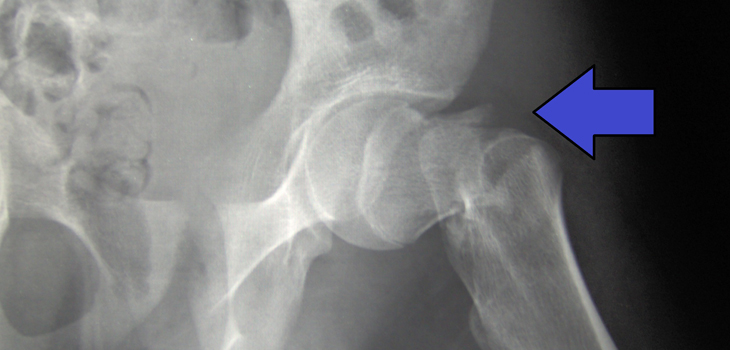
One type of surgery, above all others, appears to be uniquely suited to training residents. It is geriatric hip fracture surgery.
Hip Fracture Surgery: A Notably Effective Training Tool
2 min read Premium comments
#hipfractureSecondary#hip
The study which determined this—”Resident Participation in Fixation of Intertrochanteric Hip Fractures: Analysis of the NSQIP Database”—was published in the January 17, 2018 edition of The Journal of Bone & Joint Surgery.
Co-author Samir Mehta, M.D. with the Perelman School of Medicine at the University of Pennsylvania in Philadelphia, told OTW, “Resident education is one of the pillars of our profession. There has been a lot of emphasis placed on value in medicine and, in particular, orthopedic surgery. This brings a unique intersection in terms of the role of educating residents and the ultimate outcome of our surgical interventions.”
“Geriatric hip fractures are an all too common clinical problem that the majority of residents, when in practice, will have to treat regardless of specialty level of training.”
“As such, we felt that this was an injury that was particularly relevant to examine. In addition, there is a tremendous body of literature around geriatric hip fractures examining various aspects of care and how that may impact morbidity and mortality along with national measures which facilitate data collection and analysis.
“The study revealed that resident participation in hip fracture surgery did increase time-based metrics—like operative time—but had no impact on morbidity or mortality.”
“It was safe to allow residents to participate in the operative management of patients with hip fractures. This is consistent with previous studies that have been done looking at other procedures.”
“There is an increased cost to the health care system in having residents participate in care, BUT their involvement does not lead to worse outcomes. As such, CMS [Centers for Medicare and Medicaid Services] should recognize the increased burden of surgical training on the health system. This burden is a necessity to continue to provide a high level of care for generations to come.”
“Practically, directed resident involvement in the operating room does not impact outcomes in operative geriatric hip fracture management. The importance of the engagement of the educator and the learner is critical in providing quality care to the patient.”
Author
React:
Discussion
This is a fascinating development. In my practice we've seen similar outcomes with the revised protocol. The key differentiator seems to be patient selection criteria. Has anyone else noticed the correlation with BMI thresholds?
Great point. I'd push back slightly on the conclusion, the sample size in the cited study is too small to draw population-level inferences. That said, the directional signal is compelling and worth a larger RCT.
We implemented a similar approach last year. Early results are promising but we're still gathering 12-month follow-up data. Happy to share our protocol if anyone is interested.
Join the conversation
Orthopedic professionals are discussing this. Sign in and upgrade to read every comment and add your voice.