
Distal extremity device maker Centric Medical has a new FDA 510(k) clearance for its foot and ankle plating system.
FDA Quickly Clears Foot and Ankle Plating System
1 min read Premium comments
Secondary#footandankleplatingsystem#fdaclearance
The company, a division of Life Spine, Inc., announced on January 23, 2018, that the FDA clearance offers “multiple surgical solutions” by the company to be used in foot and ankle reconstruction procedures.
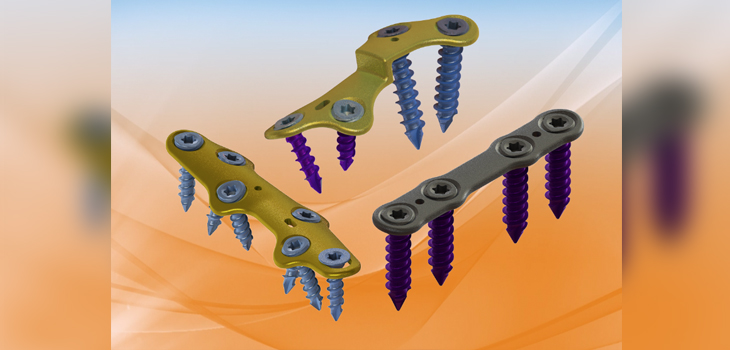
“The Centric Medical Foot and Ankle Plating System,” states a company press release, “is comprised of a variety of plates and screws intended to stabilize and fixate bone for a myriad of procedures. The low-profile plates and self-drilling and self-tapping screws were designed to minimize soft tissue disruption and irritation.
“They are offered in non-sterile, single use implantable components and are provided in a multitude of sizes and shapes which include plates specifically designed for metatarsal phalangeal fusions, lapidus fusions, midfoot fusions and calcaneal slide osteotomies.”
“When paired with our recently FDA cleared Cannulated Screw Internal Fixation System, and our existing OSTEO-LINK DBM biologics product, we have the potential for excellent clinical outcomes,” said Life Spine Vice President of Marketing Mariusz Knap. “As one of the fastest-growing, most innovative companies in our space it is crucial to our surgeons and patients that we continue to advance our offerings.”
Indications for Use
According to the FDA clearance notification, the system is indicated for use in “stabilization and fixation of fractures or osteotomies; intra and extra articular fractures, joint depression, and multifragmentary fractures; revision procedures, joint fusions, and reconstruction of the bones of small bones of the toes, feet and ankles including the distal tibia, talus, and calcaneus. The system can be used in both adult and pediatric patients.”
The clearance request was received by the agency on November 8, 2017 and cleared by December 21, 2017.
The company is privately held and based in Huntley, Illinois.
Author
React:
Discussion
This is a fascinating development. In my practice we've seen similar outcomes with the revised protocol. The key differentiator seems to be patient selection criteria. Has anyone else noticed the correlation with BMI thresholds?
Great point. I'd push back slightly on the conclusion, the sample size in the cited study is too small to draw population-level inferences. That said, the directional signal is compelling and worth a larger RCT.
We implemented a similar approach last year. Early results are promising but we're still gathering 12-month follow-up data. Happy to share our protocol if anyone is interested.
Join the conversation
Orthopedic professionals are discussing this. Sign in and upgrade to read every comment and add your voice.