
Zimmer Biomet Holdings, Inc. announced in a recent press release the results from the PROGRESS II Trial on the safety and efficacy of autologous protein solution prepared with its nStride APS Kit for treating osteoarthritis (OA) of the knee. The study titled “Clinical Outcomes of Knee Osteoarthritis Treated With an Autologous Protein Solution Injection: A 1-Year Pilot Double-Blinded Randomized Controlled Trial”, which originally appeared in The American Journal of Sports Medicine in October 2017, showed that solutions prepared with the kit offer significant improvement in pain, and has a comparable safety to saline.
Zimmer Biomet APS Kit Offers Better Pain Relief for Knee OA
2 min read Premium comments
Secondary
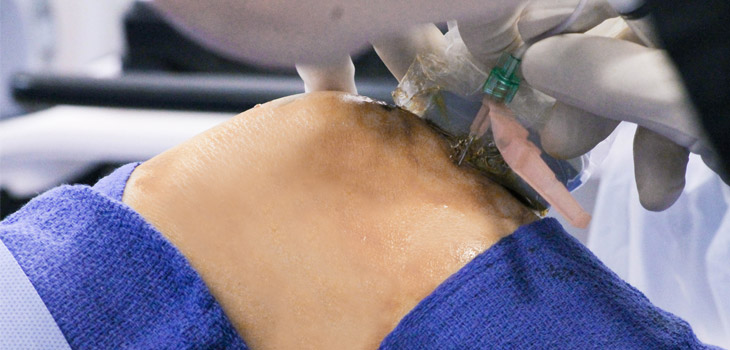
In this prospective, randomized, double-blind, saline-controlled pilot study, the researchers used the nStride APS (autologous protein solution) Kit to concentrate anti-inflammatory cytokines and growth factors from a sample of the patient’s blood into the autologous protein solution so it can be delivered back to the patient through an intra-articular injection into the knee joint.
A total of 46 patients with unilateral, mild to moderate symptomatic knee osteoarthritis pain from four trial sites across Europe were enrolled in the trial and randomized to receive either a single injection of APS prepared by the nSTRIDE APS kit (n = 31) or a single injection of saline (n = 15).
Both patient-reported outcomes and adverse events were measured at two weeks, one month, three months, six months and 12 months after the injection. Visual Analog Scale (VAS), the Western Ontario and McMaster Universities Osteoarthritis Index (WOMAC) and the Knee Injury and Osteoarthritis Outcome Score (KOOS) were used to measure clinical effectiveness. X-ray and magnetic resonance imaging (MRI) were also taken at baseline and again at three and 12 months after the injection.
According to the press release, patients in the APS group had a 65% change in WOMAC pain score from baseline to 12 months compared to the 41% change seen in the saline group (p = .02). Using the VAS, the APS group had a 49% improvement compared to a 13% improvement in the saline group (p = .06). In addition, no serious adverse events were seen either related to the procedure or to the device.
“Inflammation is a critical factor in the pain and cartilage breakdown associated with knee osteoarthritis, and research has established that APS derived from the patient’s whole blood contains a host of powerful anti-inflammatory and anabolic proteins,” said Elizaveta Kon, M.D., associate professor, Humanitas University, Milan, Italy, and lead investigator of the PROGRESS II trial, in a press release.
Currently the nSTRIDE APS Kit is not commercially available in the United States, but holds the CE Mark in Europe and is approved as the APS Kit in Japan. The PROGRESS IV trial is currently enrolling patients and the PROGRESS V trial is being conducted in Europe.
Zimmer Biomet, headquartered in Warsaw, Indiana, is a global leader in musculoskeletal healthcare. For more information, visit here.
Author
React:
Discussion
This is a fascinating development. In my practice we've seen similar outcomes with the revised protocol. The key differentiator seems to be patient selection criteria. Has anyone else noticed the correlation with BMI thresholds?
Great point. I'd push back slightly on the conclusion, the sample size in the cited study is too small to draw population-level inferences. That said, the directional signal is compelling and worth a larger RCT.
We implemented a similar approach last year. Early results are promising but we're still gathering 12-month follow-up data. Happy to share our protocol if anyone is interested.
Join the conversation
Orthopedic professionals are discussing this. Sign in and upgrade to read every comment and add your voice.