
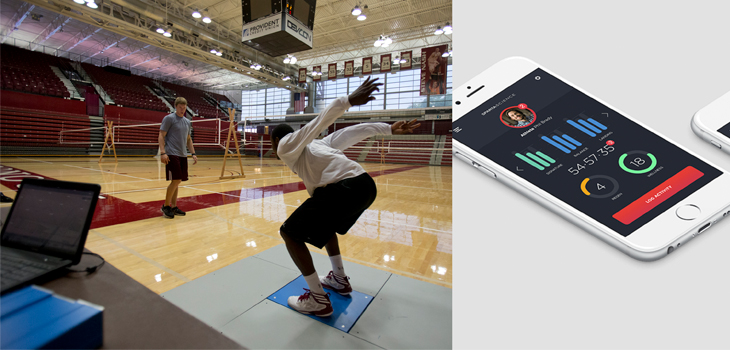
Sparta Science, a sports tech company that applies data and technology to the prediction and reduction of injuries, has raised $7 million in a series A investment round led by Playground Global in order to expand the use of its software platform into clinical and military settings and to invest in the development of additional hardware.
Sparta Science Raises $7M to Expand Into Clinical Settings
1 min read Premium comments
Secondary
“The Sparta Science team provides a solution for putting objective, repeatable measurements, supported by nearly a decade of collected data, behind the sometimes-esoteric practice of sports science,” Matt Hershenson, co-founder of Playground Global said in a press release. “We believe this technology has benefits beyond the pitch and are pleased to help enable the spread of this technology into clinical settings and beyond.”
Phil Wagner, M.D., CEO and founder of Sparta Science, told OTW in an interview that, “For us, the goal is to expand more into clinical settings and in order to do that we need to focus on development of additional hardware components and who better to help us do that than Playground Global.”
He added, “The concept of force analysis applies to everybody and what we are missing is the hardware to be able to measure more remotely and more frequently. As a software company focused on data we need to figure out ways to make the data more available to people.”
According to the release, Sparta Science also hired for more than 18 growth-oriented positions, including vice president of government, which includes military and first-responders, senior vice president of sales, vice president of sport and medical director.
The software is used by professional and collegiate sports teams, including the Cleveland Cavaliers, San Francisco 49ers and Rutgers University to help coaches and trainers measure and reduce player injury risk, increase on-field time and decrease costs associated with injury treatment, insurance and sidelined players.
Sparta Science is headquartered in Menlo Park, California.
Author
React:
Discussion
This is a fascinating development. In my practice we've seen similar outcomes with the revised protocol. The key differentiator seems to be patient selection criteria. Has anyone else noticed the correlation with BMI thresholds?
Great point. I'd push back slightly on the conclusion, the sample size in the cited study is too small to draw population-level inferences. That said, the directional signal is compelling and worth a larger RCT.
We implemented a similar approach last year. Early results are promising but we're still gathering 12-month follow-up data. Happy to share our protocol if anyone is interested.
Join the conversation
Orthopedic professionals are discussing this. Sign in and upgrade to read every comment and add your voice.