
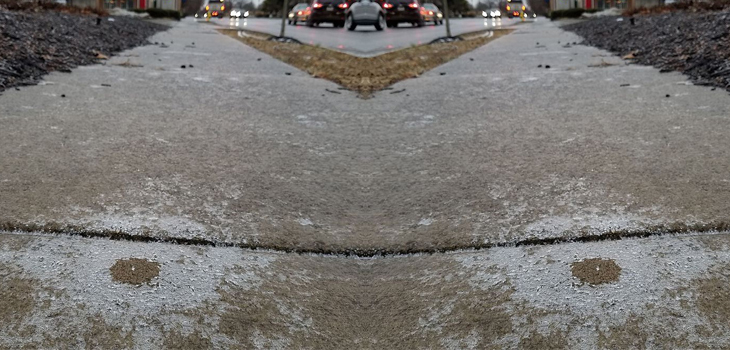
Falls in winter “are just a patch of ice away.”
Season of Falls Is Upon Us
1 min read Premium comments
Secondary
And among the most frequently broken area of the body in a winter fall is the wrist.
Brett Richards, M.D., Ogden Clinic, Ogden, Utah, points out that a wrist fracture is seldom a simple break. Distal radius fractures, he says, trigger soft tissue injuries in up to 81% of patients.
The distal radius bone is very susceptible to fracture, according to Richards, because it makes up about 80% of the joint surface in the wrist and bears almost all the weight from a fall on the outstretched hand. It’s one of the most common fractures and doctors treat it using a variety of techniques from casting to pinning to open surgery with plates and screws.
Women over 50 are especially prone to breaking a wrist because of bones weakened by osteoporosis. Wrist fractures are about five times more common in winter because of winter sports and icy walkways.
Eighty-one percent of patients will have some type of intracarpal soft tissue injury present in association with the fracture.
Seventy percent of wrist fractures will have some type of ligament injury and 55% of patients experience triangular fibrocartilage complex (TFCC) injuries.
Fifty-five percent of patient’s experience scapholunate ligament injuries. This is the most important ligament in the wrist for proper wrist function.
Finally, 35% of patient’s experience lunotriquetral ligament injuries. In many cases, according to Richards, another surgery or treatment course is needed to correct the associated injuries.
Author
React:
Discussion
This is a fascinating development. In my practice we've seen similar outcomes with the revised protocol. The key differentiator seems to be patient selection criteria. Has anyone else noticed the correlation with BMI thresholds?
Great point. I'd push back slightly on the conclusion, the sample size in the cited study is too small to draw population-level inferences. That said, the directional signal is compelling and worth a larger RCT.
We implemented a similar approach last year. Early results are promising but we're still gathering 12-month follow-up data. Happy to share our protocol if anyone is interested.
Join the conversation
Orthopedic professionals are discussing this. Sign in and upgrade to read every comment and add your voice.