
Researchers at the University of Birmingham, UK and their colleagues have developed a new method for growing bone tissue “in a dish.”
Scientists Develop New Bone Growth Method
1 min read Premium comments
Secondary#surgery#bone#osteocytes
They claim that their developed bone resembles its natural counterpart on both structural and functional levels and could be used for studying bone-related health issues.
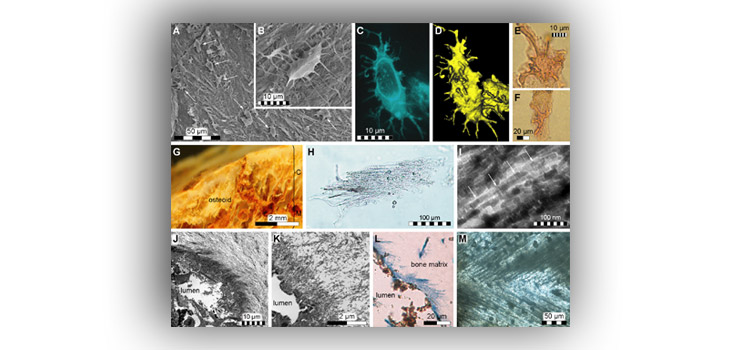
Scientists in Professor Liam Grover’s (BMedSc(Hons), Ph.D., FIMMM) research group created an environment structurally similar to bone tissue at a critical stage of repair, called a fracture callus. They then grew bone cells over a one-year period in a specifically designed culture of materials created to resemble the building blocks of a fracture callus. This tailored environment, they claimed, gives the cells a perfect platform on which to carry out their normal function of promoting growth of new, healthy bone.
As Grover explained, “Osteocytes are the most numerous cells in bone, but are very difficult to maintain in culture. People can only really manage to culture them for around two weeks. What we did here, was to create a culture system where we were able to maintain this mature bone cell type for upwards of a year.” Over the one-year period the cells transformed into a different cell type—an osteocyte.
“As a result of the long-term maintenance of the osteocytes and their interactions with the ‘callus-like’ surroundings, the researchers observed a shift in the composition of the cell culture environment.” The cells eventually abandoned their initial material network and replaced it with a cell-synthesized structure comprised of natural components found in bone.”
“While multiple studies have demonstrated the growth of ‘bone-like’ structures in a lab, none, says Grover, have replicated the complex structure of bone to this extent. It, therefore, he says, represents a step forward in the field of orthopaedic research.”
Author
React:
Discussion
This is a fascinating development. In my practice we've seen similar outcomes with the revised protocol. The key differentiator seems to be patient selection criteria. Has anyone else noticed the correlation with BMI thresholds?
Great point. I'd push back slightly on the conclusion, the sample size in the cited study is too small to draw population-level inferences. That said, the directional signal is compelling and worth a larger RCT.
We implemented a similar approach last year. Early results are promising but we're still gathering 12-month follow-up data. Happy to share our protocol if anyone is interested.
Join the conversation
Orthopedic professionals are discussing this. Sign in and upgrade to read every comment and add your voice.