
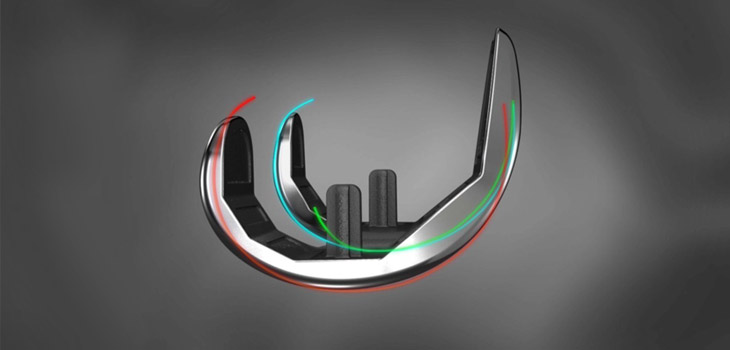
ConforMIS, Inc., based in Billerica, Massachusetts, has announced the publication of a study in The Journal of Knee Surgery on December 14, 2017 (“Accuracy of Coronal Plane Mechanical Alignment in a Customized, Individually Made Total Knee Replacement with Patient-Specific Instrumentation”) that investigated the ability of the iTotal CR Knee Replacement System to restore coronal plane mechanical axis alignment in a patient’s leg.
Positive Results for ConforMIS’ iTotal CR Knee System
2 min read Premium comments
Secondary#knee#pain
Gary Levengood, M.D. at Sports Medicine South in Lawrenceville, Georgia, led the study, which involved 63 consecutive patients. Dr. Levengood performed the surgeries using the ConforMIS iTotal CR implant system and ConforMIS iJig patient specific instrumentation.
According to Dr. Levengood, “As our data shows, we were able to achieve precise alignment, with absolutely no outliers. Prior to using the ConforMIS iTotal CR, I utilized computer navigation to achieve a reproducible alignment; however, this added substantial time to my procedures and required surgical placement of tracking pins in each patient’s femur and tibia during the operation.”
“With the iTotal, I am provided a complete operative plan, from the CT [computed tomography] scan each patient gets prior to surgery. Based on these results, I have full confidence in the system to deliver consistent and improved surgical outcomes.”
Dr. Levengood told OTW, “The study was modeled on a study from the Journal of Arthroplasty that looked at MRI cutting blocks ‘Visioniare’ versus computer navigation and they had a large number of patients that had less the adequate alignment.”
“I had been using computer navigation for some time prior to looking at ConforMIS so I decided on my first couple of cases to see if the CT based pre-navigated blocks were accurate. After my first several cases I found they were quite accurate so I decided to do the next consecutive cases with computer navigation checking the prenavigated block cuts until I reached the number they had done in the Australian study.”
“The most important results were that with the CT based prenavigated blocks no patients were beyond three degrees of neutral alignment with the vast majority being at neutral alignment. This allowed me to replicate normal alignment on all my patients no matter the preop deformity or patient habitus. Hopefully, allowing the stresses on the implant to be minimized and to therefore increase long term survivorship.”
“CT based cutting blocks are superior to MRI based blocks and the iFit technology used by ConforMIS produces an accurate, reproducible result.”
“This was done in a community-based hospital setting with real world patients, that occur in a normal physician office setting. I think more research should be encouraged in community settings as I think it more accurately reflects the real world experience. I was also impressed by the engineers at ConforMIS and their ability to produce a product which allows a reproducible result. The ConforMIS cutting guides are extremely accurate and allow the surgeon to be more efficient.”
Author
React:
Discussion
This is a fascinating development. In my practice we've seen similar outcomes with the revised protocol. The key differentiator seems to be patient selection criteria. Has anyone else noticed the correlation with BMI thresholds?
Great point. I'd push back slightly on the conclusion, the sample size in the cited study is too small to draw population-level inferences. That said, the directional signal is compelling and worth a larger RCT.
We implemented a similar approach last year. Early results are promising but we're still gathering 12-month follow-up data. Happy to share our protocol if anyone is interested.
Join the conversation
Orthopedic professionals are discussing this. Sign in and upgrade to read every comment and add your voice.