
For the committed runner who “has everything” here is something new.
Headphones Double for Running Coach
1 min read Premium comments
Secondary
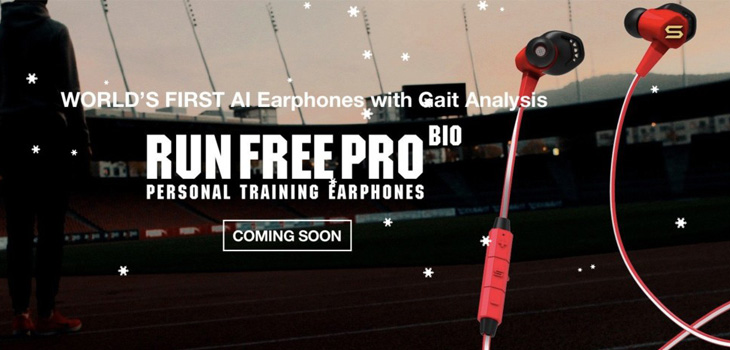
It is a set of in-ear headphones that the manufacturers claim will diagnose and correct a runner’s running form. It is as if the runner has a running coach in each ear analyzing the run and giving helpful advice.
While the runner is running, the headphone sensors track different parameters integral to good form and preventing injury.
Some are cadence (steps per minute), step length, step width, vertical oscillation (the up and down bounce of the runner’s body), head tilt angle, stance/flight time, shock, maximum leg force, balance, and consistency.
If any of these fall outside an optimal range, the app’s digital trainer will tell the runner in the headphones what to adjust to correct their form. Ideally, this should help people who must be mindful of existing injuries and prevent injuries from happening to begin with.
The Run Free Pro Bio earphones, will be available in the spring while the earphones and Blade will be available in the fall. Both are made by Soul Electronics of Redlands, California.
Author
React:
Discussion
This is a fascinating development. In my practice we've seen similar outcomes with the revised protocol. The key differentiator seems to be patient selection criteria. Has anyone else noticed the correlation with BMI thresholds?
Great point. I'd push back slightly on the conclusion, the sample size in the cited study is too small to draw population-level inferences. That said, the directional signal is compelling and worth a larger RCT.
We implemented a similar approach last year. Early results are promising but we're still gathering 12-month follow-up data. Happy to share our protocol if anyone is interested.
Join the conversation
Orthopedic professionals are discussing this. Sign in and upgrade to read every comment and add your voice.