
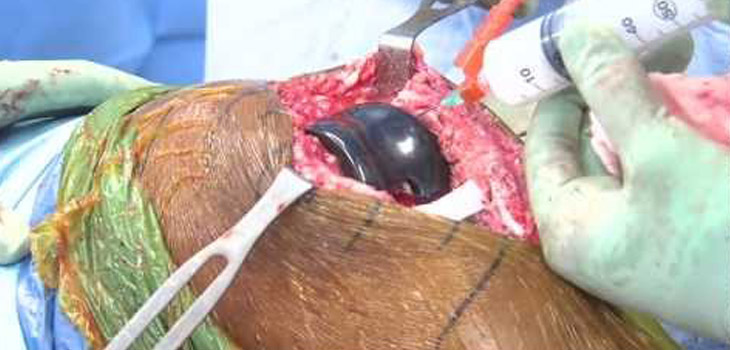
Researchers from New York have examined data from 1,808 patients who underwent primary total knee arthroplasty (TKA) and discovered that eliminating patient-controlled analgesics (PCAs) and femoral nerve blocks are viable ways to help these patients.
Eliminate Nerve Blocks and Opioids in Knee Arthroplasty?
2 min read Premium comments
#kneesurgery#painmanagementSecondary#knee
The study, “Can Multimodal Pain Management in TKA Eliminate Patient-controlled Analgesia and Femoral Nerve Blocks?” appears in the January 2018 edition of Clinical Orthopaedics and Related Research.
The authors wrote, “All patients received a multimodal pain management protocol including preoperative oral medications, spinal or general anesthesia, a short-acting intraoperative pericapsular injection, and continued postoperative oral narcotics for breakthrough pain.”
“From September 2013 to April 2014, all patients received an intraoperative FNB [femoral nerve block] and a PCA for the first 24 hours postoperatively (Cohort 1). From May 2014 to October 2014, a periarticular injection of liposomal bupivacaine was added to the protocol and FNBs were discontinued (Cohort 2). After April 2015, PCA was eliminated (Cohort 3)…”
Richard Iorio, M.D., a co-author on the study, is an orthopedic surgeon at New York University Langone Medical Center, Hospital for Joint Diseases. Dr. Iorio commented to OTW, “Maximizing pain relief while minimizing narcotics and accelerating functional rehabilitation while preventing complications is the goal of multi-modal pain management after TKR.”
Regarding their results, the authors wrote, “Total narcotic use was the least in Cohort 3. There was an increase in pain score immediately after surgery in Cohort 3; however, it was not different for the remainder of the hospital stay. Patients who did not receive PCA reached functional milestones for both gait and stairs faster by postoperative day 1. Discharge to home occurred more frequently in Cohort 3. There were no differences in pain-related HCAHPS [Hospital Consumer Assessment of Healthcare Providers and Systems] scores across all cohorts.”
Dr. Iorio told OTW, “Our process has been an iterative improvement in our pain management process over a four-year period. We are moving toward an opioid sparse program for TJR patients. We continue to use our historical cohorts with single changes in our protocol to measure the effectiveness of our modified protocols.”
“The ability to eliminate femoral nerve blocks and patient-controlled analgesia while decreasing narcotic use and improving quality and cost metrics is very valuable. We will continue to tweak and modify these protocols in an iterative fashion to move toward the most effective protocol for our patients.”
Author
React:
Discussion
This is a fascinating development. In my practice we've seen similar outcomes with the revised protocol. The key differentiator seems to be patient selection criteria. Has anyone else noticed the correlation with BMI thresholds?
Great point. I'd push back slightly on the conclusion, the sample size in the cited study is too small to draw population-level inferences. That said, the directional signal is compelling and worth a larger RCT.
We implemented a similar approach last year. Early results are promising but we're still gathering 12-month follow-up data. Happy to share our protocol if anyone is interested.
Join the conversation
Orthopedic professionals are discussing this. Sign in and upgrade to read every comment and add your voice.