
Jamie Moyer, who pitched for 8 Major League Baseball (MLB) teams over a 25-year career set the record for longevity when he retired at the age of 49 years old in 2012.
Does Tommy John Surgery Affect Pitcher Longevity?
6 min read Premium comments
#shoulderinjuries#baseballpitcher#ulnarcollateralreconstruction#majorleaguebaseball#elbowinjuries#retirementfromMLB
Fast-ball pitcher Bartolo Colon who is in his 20th year at 42 years old holds the active pitcher record for longevity.
The average tenure for a major league pitcher is about six years. Yet, a few pitchers seem to have almost preternatural longevity. Indeed, pitchers seem more likely than catchers, infielders or outfielders to last more than a decade.
Notably, Jamie Moyer had Tommy John surgery and credits it for extending his playing career. Bartolo Colon had stem cell treatments and famously credited them with helping him avoid Tommy John surgery.
When Major League Baseball (MLB) pitchers experience the inevitable pain of their profession, they think about recovery, getting back on the field as quickly as possible, but also the longer-term effect of the injury and whether it could lead to subsequent surgeries and a shorter career.
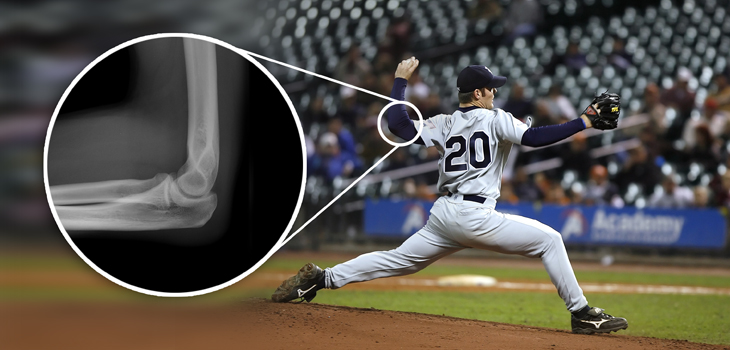
Tommy John surgery, otherwise known as Ulnar Collateral Ligament Reconstruction (UCLR), is arguably the most popular surgery among pitchers. Some say that it has extended their playing career. Recent studies have found that pitchers who had the surgery were able to play for approximately another 3.9 ± 2.84 seasons before retiring.
Little, however, is known about the role of injury and, by extension, surgery in the timing of MLB pitchers retiring.
One study, “Reasons for Retirement Following Ulnar Collateral Ligament Reconstruction Among Major League Baseball Pitchers,” published in the December, 2017 issue of Orthopaedic Journal of Sports Medicine, sought to determine the answers to those questions.
Brandon J. Erickson, M.D., an orthopedic surgeon in the division of sports and shoulder at the Hospital for Special Surgery in New York, and corresponding author of the study told OTW, “The most surprising, but encouraging result of the study was that pitchers who had a history of a UCLR were no more likely to retire from shoulder or elbow issue than pitchers with no history of a UCLR.”
Understanding Why Pitchers Retire
For this study, Erickson and colleagues wanted to determine why and when MLB pitchers who underwent UCLR retired from baseball and then compare the answers to those of pitchers who never underwent the surgery. Brandon and colleagues hoped that by identifying any common reasons they could possibly increase the length of a pitcher’s career by preventing its occurrence.
Erickson and colleagues identified all MLB pitchers who underwent UCLR through publicly available data and then they were matched based on sex, age, draft year and draft round to a cohort of pitchers who didn’t have the surgery. Then reasons for retirement were determined for those pitchers who no longer pitch in the MLB.
According to the data, 153 MLB pitchers underwent UCLR between 1974 and 2015 and are currently retired. The mean ±SD (Standard Deviations) time to retirement was 4.4 ±4.7 years (range, 0-26 years) after the index year in the control groups and 4.4 ± 3.5 years (range, 0-15 years) after surgery in the UCLR group (p = .388).
In addition, shoulder injury as a reason for retirement was more common in the control group than the UCLR group (p = .011). Elbow injury as a reason for retirement was not more common in either group (p =.379), and leg injury as a reason for retirement was more common in the control group (p = .013). Also, performance as a reason for retirement was more common in the UCLR group than the control group (p < .001).
Regarding a decline in overall performance and not elbow and shoulder injury being the most prevalent reason for retirement in the UCLR group, Erickson said, “As most MLB players age, their performance declines. Their shoulder and elbow begin to wear out, their back and scapular muscles (latissimus) may begin to hurt, and they oftentimes become less effective.”
“When they start to have more general aches and pains, they can become less effective pitchers. They have not sustained a discrete injury to their shoulder or elbow, but they are just beginning to break down in general. When their performance begins to decline, and they can no longer compete at an elite level, they will often retire.”
Erickson and colleagues also pointed out that while many surgeons believe that prior elbow injury or elbow surgery, including UCLR, are risk factors for sustaining a shoulder injury, no study to date including the current study has shown this to be true.
They suggested that the rigor of rehabilitation process and the improvement in pitching mechanics seen following UCLR may be the reason although more research into this must be done to get any definitive answers.
When it comes to the higher number of leg injuries in the control group than in the UCLR group, Erickson suggested that this may also be due to an improvement in balance and throwing mechanisms after UCLR.
Other Factors May Be in Play
The researchers also found some other interesting contrasts between the UCLR and non-UCLR pitchers. For example, in the UCLR group, more of the players were drafted out of high school compared to the non-UCLR group where most the players were drafted out of college. In addition, performance wise, UCLR pitchers had a better WHIP (walks plus hits per inning pitched) during the peak performance year of their careers and in their last year before retirement compared to those pitchers who never had the surgery.
They wrote, “Furthermore, pitchers who underwent UCLR had a higher season salary than controls. This shows that, according to performance and salary, better pitchers were more likely to undergo UCLR than pitchers who were not as highly valued or as effective (controls). However, at the end of their careers, players who underwent UCLR were more likely than controls to be released during the season. This finding could indicate a rapid in-season decline in performance among these pitchers, as they were not retained through the end of their final seasons, although the etiology of this decline is unknown.”
UCLR’s Effect on Performance
While the results of this study offer good news on the long-term results of UCLR in baseball pitchers, they also bring up questions on how else the surgery might affect performance after the athlete returns to sport.
Erickson said, “We know that some pitchers return at the same or higher level after UCLR, but some do not. There have been some studies that have shown pitchers lose a small amount of velocity on their fastball following UCLR. No studies have really looked at the mental component of returning to sport following UCLR (meaning, do players feel confident in their elbow, or are they worried that they could potentially injure it again and thus favor it slightly).
“There are other issues at play as well when players undergo UCLR. Recent studies have found loss of shoulder rotation can increase players’ risk for a UCL injury. Hence, when players return following UCLR, their pitching coach often focuses on maintaining shoulder ROM [range of motion]. Pitchers may also change their pitching mechanics when they return to put less stress on the elbow.”
He added, “The take home message is that MLB pitchers who have undergone UCLR are no more likely to retire from shoulder or elbow injuries than are those who have not undergone UCLR, and that career length was similar between pitchers with and without a history of UCLR. Hence, UCLR is a successful, albeit not perfect, procedure at returning these elite athletes to their sport and allowing them to continue to compete at a high-level year after their surgery.”
On limitations of the study, Erickson said, “Any study that uses publicly available data is subject to some limitations. The main issue is with verification of what is found on injury reports, team website, etc. As you know, teams do not always know what is exactly wrong with a player at first, or a player may not want to divulge what is wrong, so the information can be difficult to locate and validate.”
Erickson and his colleagues called for further studies to evaluate possible reasons for the decline in performance seen in the UCLR group.
Author
React:
Discussion
This is a fascinating development. In my practice we've seen similar outcomes with the revised protocol. The key differentiator seems to be patient selection criteria. Has anyone else noticed the correlation with BMI thresholds?
Great point. I'd push back slightly on the conclusion, the sample size in the cited study is too small to draw population-level inferences. That said, the directional signal is compelling and worth a larger RCT.
We implemented a similar approach last year. Early results are promising but we're still gathering 12-month follow-up data. Happy to share our protocol if anyone is interested.
Join the conversation
Orthopedic professionals are discussing this. Sign in and upgrade to read every comment and add your voice.