
The FDA has approved a Medtronic plc intrathecal delivery method of medications that may reduce or entirely eliminate the need for systemic opioids.
Approved Medtronic Pain Pump Reduces Systemic Opioid Use
2 min read Premium comments
Secondary
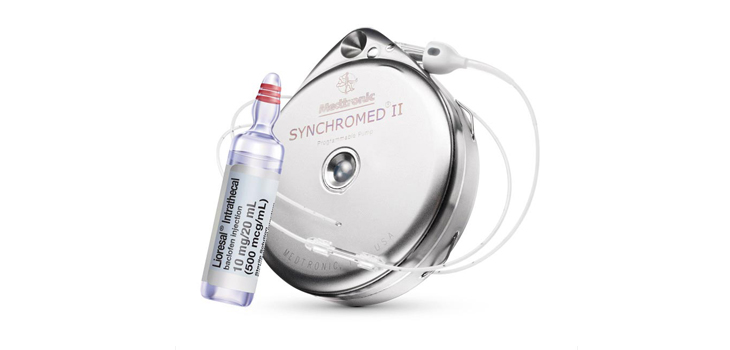
SynchroMedII Intrathecal Drug Delivery System
That’s the news on January 10, 2018 as the company announced the FDA approval of the new clinician programmer for use with the SynchroMedII Intrathecal Drug Delivery system. The system is an implantable pump that, according to the company, “provides targeted drug delivery for chronic pain and severe spasticity.”
The pump delivers medication directly to the fluid around the spinal cord, which the company says, “provides relief at lower doses compared to oral medications in appropriate patients with chronic pain or severe spasticity.” The programmer was designed to “simplify therapy management by providing clinicians with visual tools and intuitive workflows and will soon be available in the U.S.”
Candidates for the system are patients with chronic, intractable pain or severe spasticity who have not had success with other treatment options or have experienced intolerable side effects with oral medications.
The company says the system is “full-body MRI conditional” under conditions specified in the product labeling.
Reducing or Eliminating Systemic Opioid Use
Joshua Wellington, M.D., Indiana University of Health, says, “With the ongoing opioid crisis, the ability to reduce the use of systemic opioids and effectively manage my patients’ pain with the SynchroMed II pump system is more important than ever. He adds the programmer “helps simplify therapy management, enabling me to focus on providing my patients with pain relief through intrathecal delivery of medications so that systemic opioids are reduced or eliminated entirely.”
According to the company announcement, the programmer is an application that runs on a tablet that includes a screen display and guided workflows. “The programmer features visual enhancements such as side-by-side comparison of therapy changes and flex dosing graphics. The clinician programmer communicates wirelessly to the SynchroMed II pump and auto-calculations help ensure accuracy and improve programming confidence.”
The company says it also recently secured FDA approval and implemented four design changes to improve the design and performance of the pump.
Charlie Covert, vice president and general manager, Targeted Drug Delivery, Medtronic Pain Therapies, said the company’s goal was to make it “intuitive and simple for clinicians to confidently tailor treatments to best meet patients’ needs. The ability to assist with decreasing the need for systemic opioids is critical.”
Medtronic introduced drug infusion systems over 30 years ago. Since then, the company says more than 375,000 patients worldwide have received therapy from those systems.
Author
React:
Discussion
This is a fascinating development. In my practice we've seen similar outcomes with the revised protocol. The key differentiator seems to be patient selection criteria. Has anyone else noticed the correlation with BMI thresholds?
Great point. I'd push back slightly on the conclusion, the sample size in the cited study is too small to draw population-level inferences. That said, the directional signal is compelling and worth a larger RCT.
We implemented a similar approach last year. Early results are promising but we're still gathering 12-month follow-up data. Happy to share our protocol if anyone is interested.
Join the conversation
Orthopedic professionals are discussing this. Sign in and upgrade to read every comment and add your voice.