
Study: Red Clover Stops/Minimizes Bone Loss
Study: Red Clover Stops/Minimizes Bone Loss; Nutrition for Improved Hip Surgery Results; bdMARDS Reduce RA in Patients
6 min read Premium comments
#boneloss#boneturnover#isoflavone#probiotics#redclover
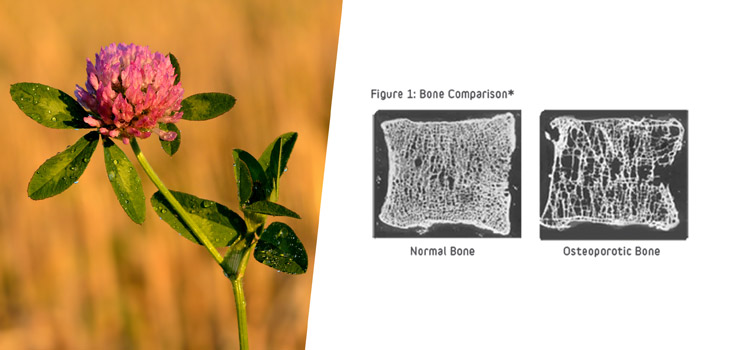
Hail the power of plants…in particular, red clover.
New research from Denmark has found that red clover extract—rich in isoflavones and probiotics—can lessen or even halt bone loss.
The work, “Combined bioavailable isoflavones and probiotics improve bone status and estrogen metabolism in postmenopausal osteopenic women: a randomized controlled trial,” appeared in September 2017 edition of the American Journal of Clinical Nutrition.
Per Bendix Jeppesen, Ph.D. with the Department of Clinical Medicine, Aarhus University, Aarhus, Denmark and co-author on the study, told OTW, “I am mainly working with drug discovery in especially lifestyle diseases. We got in contact with an organic farmer at the port of Denmark, who introduced some knowledge about the estrogen effects of red clover. He asked if we would be interested to test this substance, which is fermented in a special way, so the bioavailability is increased. We looked into the literature and found the area very interesting, and set up different clinical trials.”
The authors wrote, “This was a 12-mo, double-blind, parallel design, placebo-controlled, randomized controlled trial of 78 postmenopausal osteopenic women supplemented with calcium (1200 mg/d), magnesium (550 mg/d), and calcitriol (25 mg/d) given either RCE (60 mg isoflavone aglycones/d and probiotics) or a masked placebo [control (CON)].”
Dr. Jeppesen commented to OTW, “We have tested this in two different populations, one group was women with only menopause symptoms and the other group was women with osteopenia. In both cases we got impressive results, where we could see that we were able to treat menopause symptoms and bone loss. We stopped or minimized bone loss in the two different research populations.”
“As we know that the conventional treatment contains risk for side effects, we find the treatment with fermented red clover extract very interesting. It has shown no side effect and even may protect against cancer according to the last report from the EFSA [European Food Safety Authority].”
“We will recommend it to be used especially for women with menopause symptoms and who have risk for a high resorption of bone tissue (bone loss) during the menopause period, and thereby minimize the bone loss so they have more to counteract with later in their lives.”
“We know that the effect of red clover is very effective for women with osteopenia, but we wait to get permission to make a clinical trial on women with osteoporosis.”
“We know that a lot of the patients with osteoporosis and in treatment with bisphosphonates (e.g. alendronate) may develop osteonecrosis of the jaw. We have seen some examples, but not yet documented in clinical trails, that red clover can have a beneficial effect on jaw necrosis.”
“We can see that different biomarkers suggest that red clover both affect resorption and formation of bone tissue. What is important is that the red clover has to be fermented to have this physiological effect, due to the bioavailability.”
“As the effect on the bone metabolism is different from the bisphosphonates, we belief that the bone strength will continue to improve with longer use, which is opposite for the bisphosphonates increases fracture risk with long term use and it is recommended that treatment only be given up to five years.”
Optimize Postop Nutrition for Improved Hip Surgery Results
In elderly patients undergoing hip fracture surgery, is serum albumin level associated with death, specific postoperative complications, length of stay, and readmission?
Those were the questions posed by researchers from Rush University Medical Center in Chicago and the University of North Carolina School of Medicine. Their study, “Serum Albumin Predicts Survival and Postoperative Course Following Surgery for Geriatric Hip Fracture,” was published in the December 20, 2017 edition of The Journal of Bone and Joint Surgery.
Craig Della Valle, M.D., chief of the Division of Adult Reconstructive Service at Rush, commented to OTW, “We have previously examined the link between hypoalbuminemia and complications following elective hip and knee arthroplasty and found that it was consistently associated with poor outcomes when examining important variables including the risk of infection, complications and economic indicators as well such as length of hospital stay.”
“Examining geriatric hip fractures was a natural progression. Clearly the most surprising link was the strong association between hypoalbuminemia and mortality. It has long been recognized that mortality is high after geriatric hip fractures and with a simple blood test done before surgery we seem to be able to identify those patients at highest risk.”
The authors wrote, “A retrospective cohort study of geriatric patients (≥65 years of age) undergoing a hip fracture surgical procedure as part of the American College of Surgeons National Surgical Quality Improvement Program was conducted. Outcomes were compared between patients with and without hypoalbuminemia…. There were 29,377 geriatric patients undergoing a hip fracture surgical procedure who met inclusion criteria; of these patients, 17,651 (60.1%) had serum albumin available for analysis.”
Dr. Della Valle told OTW, “I think as orthopedic surgeons we need to be thinking about our patients more ‘holistically’ and their nutritional status is one important factor to consider.”
“Based on these findings, surgeons may consider trying to optimize a patient’s nutrition in the perioperative period following surgical management. It would also seem important to consider the albumin status when risk stratifying for public reporting or payment purposes.”
Daniel Bohl, M.D., M.P.H. an orthopedic resident at Rush University and co-author on the research, told OTW, “The close association of albumin level with mortality risk was impressive. Albumin can be used to inform the prognosis prior to geriatric hip fracture surgery and guide nutritional intervention after geriatric hip fracture surgery.”
“The next step is prospective, randomized studies designed to guide nutritional interventions shortly following surgery.”
bDMARDs, RA Guidelines and Their Effect on THR, TKR
What happens to rheumatoid arthritis (RA) rates when biological DMARDs (disease-modifying anti-rheumatic drugs) are introduced into a population?
Using a large registry, Danish researchers set out to answer this question.
Their work, “Incidence of hip and knee replacement in patients with rheumatoid arthritis following the introduction of biological DMARDs: an interrupted time-series analysis using nationwide Danish healthcare registers,” appears in the December 15, 2017 edition of Annals of the Rheumatic Diseases.
René Lindholm Cordtz, Ph.D. student at the Center for Rheumatology and Spine Diseases, Rigshospitalet-Gentofte in Copenhagen, Denmark and co-author on the study, told OTW, “We thought the topic was interesting because biological DMARDs [bDMARDS] have proven effective in minimizing disease activity among rheumatoid arthritis patients, but it is unsure if they affect the risk of major joint surgery, more specially the need for total hip and total knee joint replacements.”
“These surgical interventions are considered surrogate markers of end-stage joint damage in rheumatoid arthritis patients.”
“The main advantage of our study design was the use of nationwide healthcare registers in Denmark, a nation with universal healthcare access for all residents.”
“We were able to show the secular trends in a cohort of rheumatoid arthritis (RA) patients and to compare with age, sex and municipality matched general population controls. The use of interrupted time series analysis allowed us to visualize changes in incidence rates before and after introduction of biological DMARDs, and not just the overall incidence rate before and after.”
“The major finding was that the 5-year incidence rate of total knee replacements increased among rheumatoid arthritis patients and general population controls, but following the introduction of biological DMARDs in 2003, the incidence rate started to decrease for rheumatoid arthritis patients, whereas it continued to increase in the general population.”
“The incidence rate of total hip replacements had already started to decrease among rheumatoid arthritis patients before biological DMARDs were available suggesting that other factors such as increased focus on early aggressive treatment with conventional DMARDs could have affected this joint, but this remains speculation.”
“Our results indicate that modern treatment of RA has a direction of great benefit for these patients as their risk of major joint destruction and the need for joint replacement are approaching the level in the general population.”
“The short-term risk of joint failure and associated risk of total hip and knee replacement has decreased for rheumatoid arthritis patients, and looks to be getting closer to the incidence rate among age- and sex matched individuals from the general population.”
Author
React:
Discussion
This is a fascinating development. In my practice we've seen similar outcomes with the revised protocol. The key differentiator seems to be patient selection criteria. Has anyone else noticed the correlation with BMI thresholds?
Great point. I'd push back slightly on the conclusion, the sample size in the cited study is too small to draw population-level inferences. That said, the directional signal is compelling and worth a larger RCT.
We implemented a similar approach last year. Early results are promising but we're still gathering 12-month follow-up data. Happy to share our protocol if anyone is interested.
Join the conversation
Orthopedic professionals are discussing this. Sign in and upgrade to read every comment and add your voice.