
A product of Korea, judged by the country’s Ministry of Trade, Industry and Energy to rank among the top five in global market share within the next seven years, was recognized by an awards ceremony in Seoul.
rhBMP-2 Product Wins Korean Approval
1 min read Premium comments
Secondary
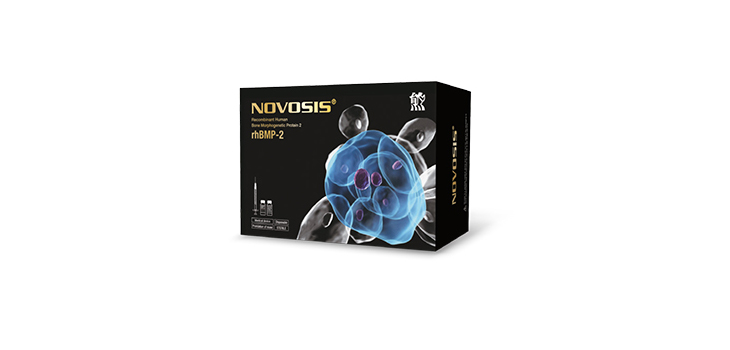
The product is Novosis, a bone graft infused with a recombinant human bone morphogenetic protein. It is second rhBMP-2 bone graft of its kind, after Medtronic’s Infuse Bone Graft.
According to the company, Novosis gained the Ministry of Food and Drug Safety’s approval as Korea’s first rhBMP-2 bio-fusion device.
The company which developed the product and is producing it, CGBIO, said it proved the safety and efficacy of the drug in 100 Korean patients with severe lumbar disc herniation, spinal stenosis, spondylolisthesis, and spondylolysis. Novosis had a high rate of bone formation and a good safety profile compared to autologous bone grating, according to CGBIO.
The company also announced that it was expanding abroad starting with the Asian market while looking for global partnerships in Europe and the U.S. The world market amounts to around 2.6 trillion won ($2.36 billion) and the domestic market is about 50 billion won, company officials said.
Author
React:
Discussion
This is a fascinating development. In my practice we've seen similar outcomes with the revised protocol. The key differentiator seems to be patient selection criteria. Has anyone else noticed the correlation with BMI thresholds?
Great point. I'd push back slightly on the conclusion, the sample size in the cited study is too small to draw population-level inferences. That said, the directional signal is compelling and worth a larger RCT.
We implemented a similar approach last year. Early results are promising but we're still gathering 12-month follow-up data. Happy to share our protocol if anyone is interested.
Join the conversation
Orthopedic professionals are discussing this. Sign in and upgrade to read every comment and add your voice.