
Omnia Medical, located in Morgantown, West Virginia, claims a first.
Omnia Medical’s PEEK VBR System First to FDA Clearance
2 min read Premium comments
Secondary
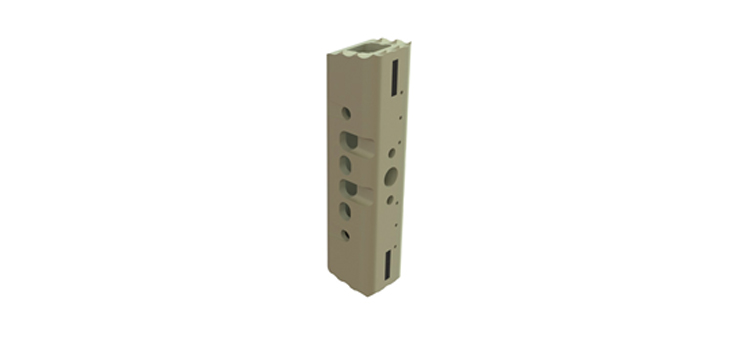
On December 7, 2017, the company announced its vertebral body replacement (VBR) system is the first FDA 510(k) cleared system to use Invibio Biomaterial Solutions’ PEEK-OPTIMA™ HA (hydroxyapatite) Enhanced polymer “for use in the thoracolumbar spine to replace a collapsed, damaged, or unstable vertebral body.”
Omnia partnered with Invibio and JALEX Medical to develop and seek regulatory approval for the system.
The company said Invibio’s polymer is not just simply coated on the system, but is fully integrated into the polymer matrix. “Invibio´s enhanced biomaterial offers all the clinical advantages of PEEK OPTIMA Natural including a modulus similar to cortical bone, reduced stress shielding and artifact-free imaging that allows for clear fusion assessment.”
Columbus, Ohio, neurosurgeon Robert Gewirtz, M.D., who collaborated with the company, said the VBR system “is an intuitive device that is easy for the surgeon to use, and the benefits of hydroxyapatite incorporated into the structure of the implant is a real advance for our patients as it potentially offers improved outcomes.”
“The novel single-use device is available in two footprints and allows adjustments of height and lordosis using spacers and endplates.” The device also includes anti-migration features and has “a hollow center and holes to accommodate autograft or allograft” materials.
“Improvements in Overall Pain and Neurological Function”
PEEK-OPTIMA HA Enhanced, Hydroxyapatite (HA), according studies and testimonials cited by the company, has been shown to “improve bone apposition compared to unfilled PEEK-OPTIMA Natural in a pre-clinical ovine model at 4 weeks and 12 weeks, and also demonstrated performance advantages in a pre-clinical cervical spine fusion model in sheep at 6 and 12 weeks. In addition, as observed by surgeons, early clinical results have shown solid fusions with dense bone apposition at 6 months and beneficial clinical outcomes for patients, revealing specific improvements in overall pain and neurological function, when a PEEK-OPTIMA HA Enhanced interbody fusion device was used.”
The studies cited by the company evaluated the in vivo responses to PEEK-OPTIMA Natural and PEEK-OPTIMA HA Enhanced in a large animal model and in allograft in a cervical spine fusion model in sheep. The company noted the results have not been correlated with human clinical experience. The testimonials were provided by the personal experience of participating orthopedic surgeons and did not necessarily reflect those of others.
Senior management at Omnia includes Chief Technical Officer and Founder Troy Schifano, a “founding member” of Theken Spine. The company’s VP of sales is Steve Anderson who has held various sales positions at Alphatec, Precision Spine, Integra Spine, and Paradigm Biodevices. He also co-founded Custom Spine.
Author
React:
Discussion
This is a fascinating development. In my practice we've seen similar outcomes with the revised protocol. The key differentiator seems to be patient selection criteria. Has anyone else noticed the correlation with BMI thresholds?
Great point. I'd push back slightly on the conclusion, the sample size in the cited study is too small to draw population-level inferences. That said, the directional signal is compelling and worth a larger RCT.
We implemented a similar approach last year. Early results are promising but we're still gathering 12-month follow-up data. Happy to share our protocol if anyone is interested.
Join the conversation
Orthopedic professionals are discussing this. Sign in and upgrade to read every comment and add your voice.