
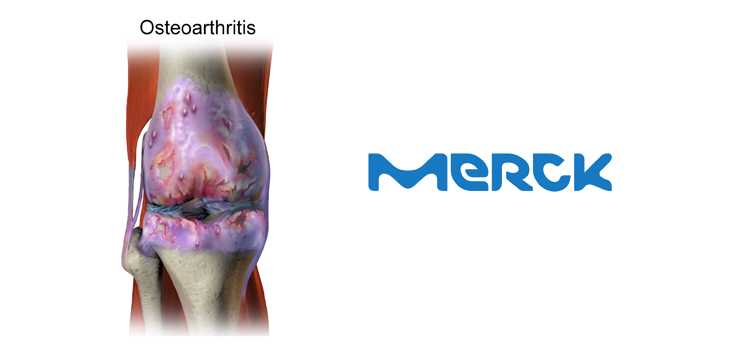
Merck KGaA, based in Darmstadt, Germany, has announced results of the two-year primary analysis of FORWARD, a five-year, multicenter Phase II study of sprifermin in patients with knee osteoarthritis (OA).
New Merck Drug Repairs Cartilage in OA Patients
1 min read Premium comments
Secondary
Luciano Rossetti, executive vice president, global head of research and development at the biopharma business of Merck KgaA, told OTW, “FORWARD is a five-year, multicenter Phase II study of injected sprifermin (truncated recombinant human FGF-18 protein) in 549 patients with knee OA.”
“It is among the first and largest trials exploring both MRI and X-ray imaging modalities as endpoints. In the five-year study, there is a two-year treatment phase, followed by three years of follow-up, which allows us to monitor the durability of effect on structure and symptoms.”
“The results of the FORWARD trial are highly encouraging. These data suggest sprifermin may not only prevent decline in cartilage thickness compared with placebo, but may also increase cartilage thickness in patients with knee osteoarthritis.”
“Demonstration of an increase in cartilage thickness has not been previously reported. The correlation of these changes with clinical endpoints is being evaluated.”
“Approximately 237 million people worldwide are living with symptomatic and activity-limiting OA, the third most rapidly rising condition associated with disability globally. By the end stage of the disease, total knee replacement is often necessary.”
“Currently, there are no approved drugs for preventing or slowing disease progression. These study results highlight the potential disease-modifying properties of sprifermin in patients with knee OA. If approved, sprifermin could be the first disease-modifying treatment for OA.”
“As we continue to evaluate the potential disease-modifying properties of sprifermin, we are discussing the Phase II results with regulatory agencies and determining our path forward.”
Author
React:
Discussion
This is a fascinating development. In my practice we've seen similar outcomes with the revised protocol. The key differentiator seems to be patient selection criteria. Has anyone else noticed the correlation with BMI thresholds?
Great point. I'd push back slightly on the conclusion, the sample size in the cited study is too small to draw population-level inferences. That said, the directional signal is compelling and worth a larger RCT.
We implemented a similar approach last year. Early results are promising but we're still gathering 12-month follow-up data. Happy to share our protocol if anyone is interested.
Join the conversation
Orthopedic professionals are discussing this. Sign in and upgrade to read every comment and add your voice.