
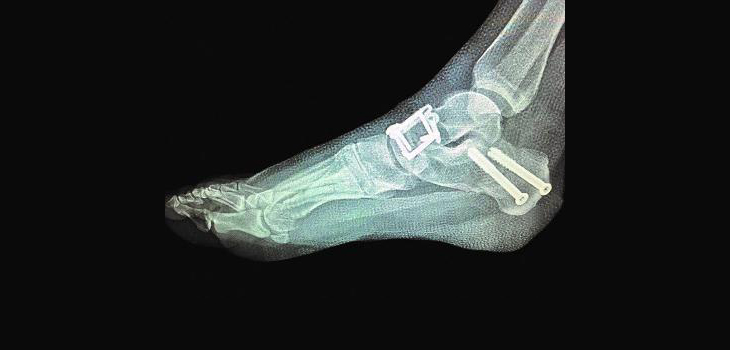
CrossRoads Extremity Systems, LLC, has recently launched the first hybrid plate and nitinol clip fixation system for foot and ankle surgeries.
First Foot/Ankle Hybrid Fixation System Improves Bone Healing
1 min read Premium comments
Secondary
The DynaForce Active Stabilization System, according to a press release, features a plate and nitinol clip fixation that allows for optimized active compression, top loading insertion and intraoperative placement flexibility.
Terrence Philbin, DO, an orthopedic surgeon in Columbus, Ohio, who was one of the first surgeons to use the new system, said in the release that “the DynaFORCE system is very intuitive in the O.R.”
He added that one of the key benefits of nitinol fixation is the continuous compression after implantation.
The system was made fully available in the U.S. market in August 2017 and response so far has been positive. The DynaForce Active Stabilization technology is patent pending worldwide.
Vernon Hartdegen, co-founder of CrossRoads, told OTW, “We have been seeing great results from surgeons and are now expediting plans to make the DynaFORCE Active Stabilization product available across the country. Our system is designed to create a better mechanical environment for bone healing. With Active Stabilization, not only do you have compression at time of surgery, but the system continually provides compression at the fusion site to promote healing.”
According to Hartdegen, the DynaForce portfolio consists of a wide variety of plate and clip options that all incorporate Active Stabilization providing the stability of a plate with active compression.
He said, “Our clip is top-loading which allows it to be seated into the plate. Its nitinol element maintains bone compression even in the event of a gapping scenario.”
CrossRoads Extremity Systems, LLC, was founded in 2014 and is headquartered in Memphis, Tennessee. For more information, visit http://www.crextremity.com.
Author
React:
Discussion
This is a fascinating development. In my practice we've seen similar outcomes with the revised protocol. The key differentiator seems to be patient selection criteria. Has anyone else noticed the correlation with BMI thresholds?
Great point. I'd push back slightly on the conclusion, the sample size in the cited study is too small to draw population-level inferences. That said, the directional signal is compelling and worth a larger RCT.
We implemented a similar approach last year. Early results are promising but we're still gathering 12-month follow-up data. Happy to share our protocol if anyone is interested.
Join the conversation
Orthopedic professionals are discussing this. Sign in and upgrade to read every comment and add your voice.