
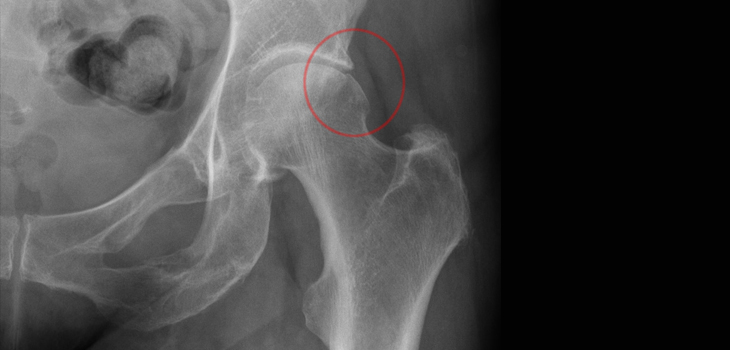
A multicenter case-control study has tackled the issue of defining clinically meaningful outcomes after hip arthroscopy for femoroacetabular impingement (FAI).
Does Arthroscopy Work for Hip Impingement?
2 min read Premium comments
Secondary
The study, “Hip Arthroscopic Surgery for Femoroacetabular Impingement with Capsular Management: Factors Associated With Achieving Clinically Significant Outcomes,” was published in the November 21, 2017 edition of The American Journal of Sports Medicine.
Shane Nho, M.D. an orthopedic surgeon at Rush University Medical Center in Chicago, told OTW, “The field has been evolving over the past several years and the patient selection and surgical technique has also changed. Our paper is the largest series in the literature and represents the state of the art in hip arthroscopy for the treatment of femoroacetabular impingement (FAI).”
The authors wrote, “Data from an institutional repository of consecutive patients undergoing primary hip arthroscopic surgery with routine capsular closure for FAI that had failed nonsurgical management between January 2012 and January 2014 were prospectively collected and analyzed. Of 474 patients during the enrollment period, 386 (81.4%) patients were available for a minimum 2-year follow-up.”
“At a minimum of 2-year follow-up, the patients had statistically significant improvements in all patient-reported outcomes (HOS-ADL [Hip Outcome Score-Activities of Daily Living], HOS-SSS [Hip Outcome Score-Sport-Specific Subscales], and modified Harris Hip Score [mHHS]), with a 1.2% rate of revision hip arthroscopic surgery and 1.7% rate of conversion to total hip arthroplasty.”
“The MCID [minimal clinically important difference] was achieved by 78.8% of patients for the HOS-ADL, and the PASS [patient acceptable symptom state] was achieved by 62.5% for the HOS-ADL.”
“Younger age, Tönnis grade 0, and lower preoperative HOS-ADL score were associated with successfully achieving the MCID for the HOS-ADL. Younger age, larger medial joint space width, and higher preoperative HOS-ADL score were associated with achieving the PASS for the HOS-ADL.”
“Younger age, lower body mass index, non–workers’ compensation status, and lower preoperative HOS-SSS score were associated with achieving the MCID for the HOS-SSS. Younger age, Tönnis grade 0, running, and higher preoperative HOS-SSS score were associated with achieving the PASS for the HOS-SSS. Overall, 49.4% of patients achieved all 4 clinically significant outcomes: both the MCID and PASS for the HOS-ADL and HOS-SSS.”
Dr. Nho commented to OTW, “Our outcome reflects a high rate of success in terms of pain, function, and return to activities. Also, the re-operation rate (1.2%) and failure rate (1.7%) is exceedingly lower than what has been published in the literature.”
“Younger, active patients with lower body mass index and without early osteoarthritis do exceptionally well after surgery in terms of a clinical improvement. If we pick the right patient and perform the correct surgery, patients with FAIs can be treated very predictably with hip arthroscopy.”
Author
React:
Discussion
This is a fascinating development. In my practice we've seen similar outcomes with the revised protocol. The key differentiator seems to be patient selection criteria. Has anyone else noticed the correlation with BMI thresholds?
Great point. I'd push back slightly on the conclusion, the sample size in the cited study is too small to draw population-level inferences. That said, the directional signal is compelling and worth a larger RCT.
We implemented a similar approach last year. Early results are promising but we're still gathering 12-month follow-up data. Happy to share our protocol if anyone is interested.
Join the conversation
Orthopedic professionals are discussing this. Sign in and upgrade to read every comment and add your voice.