
Wade Fallin, the CEO of IntraFuse, says intramedullary fixation is the standard-of-care today for most fractures of the large, long bones of the body due to superior clinical outcomes versus plating systems, yet plating systems are still the standard-of-care for the smaller, long bones of the extremities.”
FDA Clears Way for Intramedullary Fixation for Extremities
2 min read Premium comments
Secondary
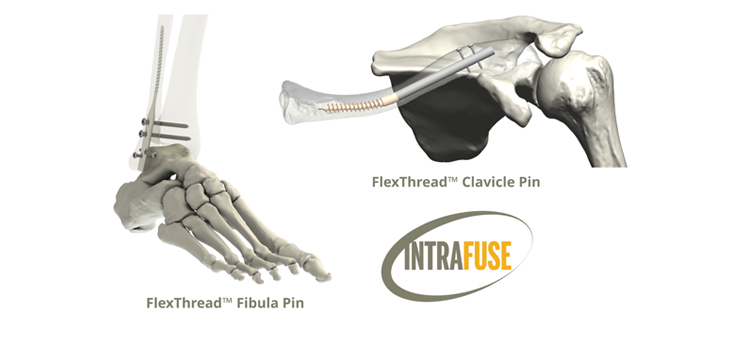
But with the FDA 510(k) clearance of Logan, Utah-based IntraFuse’s FlexThread Fibula Pin System, the options for surgeons are widening.
Percutaneous Fixation
The FlexThread provides percutaneous fixation of distal fibula fractures, primarily Danis-Weber B type fractures, or trans-syndesmotic fractures. The company said on November 1, 2017 that the system’s “simple and elegant design is easy to insert and cost competitive with today’s standard-of-care internal fixation hardware.”
The distal end of the implant is a flexible, intramedullary screw and the proximal end is a rigid, high-strength intramedullary rod. Upon insertion of the implant into the fibula, the rigid rod portion of the implant spans and supports the fracture and the flexible screw portion bends as needed to thread into the intramedullary canal.
With internal screw fixation on one side of the fracture and cross screw fixation through the rod on the other side of the fracture, the company says proper bone alignment and length can be maintained during the healing period.
Additionally, the system is compatible with either screw or flexible fixation of the syndesmosis joint as needed.
The system is available in three different screw diameters, each with two length options. “Using routine intramedullary and screw fixation techniques, bone preparation is a simple, three step sequence: place guide wire, ream, tap. Optional fracture site compression is achieved concurrent with insertion of the implant, and delivery of cross fixation screws is facilitated by a guide that connects directly to the implant inserter,” stated the company.
No Plating
The company also noted the pin provides anatomic, intramedullary fixation “that may have potential clinical advantages over fibula plating systems, including: reduced risk of hardware related pain, reduced rate of hardware removal, less risk of wound complications, infection and other morbidities due to a less invasive procedure, and less disruption of the periosteum which facilitates faster healing.”
Fallin added that FlexThread is a platform technology that can address the unique requirements for intramedullary fixation of small bone fractures where off-axis entry into the bone canal is required, or where the bone is curved. “Now cleared for both clavicle and fibula fractures, the FlexThread technology is in further development for additional indications.”
IntraFuse is a development stage medical device company incubated and operated by Surgical Frontiers.
Author
React:
Discussion
This is a fascinating development. In my practice we've seen similar outcomes with the revised protocol. The key differentiator seems to be patient selection criteria. Has anyone else noticed the correlation with BMI thresholds?
Great point. I'd push back slightly on the conclusion, the sample size in the cited study is too small to draw population-level inferences. That said, the directional signal is compelling and worth a larger RCT.
We implemented a similar approach last year. Early results are promising but we're still gathering 12-month follow-up data. Happy to share our protocol if anyone is interested.
Join the conversation
Orthopedic professionals are discussing this. Sign in and upgrade to read every comment and add your voice.