
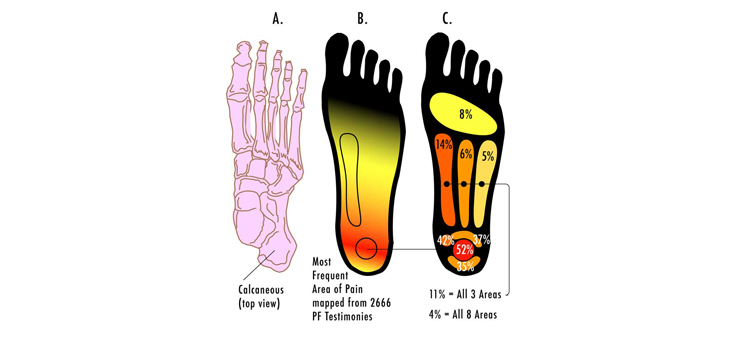
The most common cause of heel pain is what is known as plantar fasciitis. This occurs when the ligament connecting the heel bone to the toes gets strained, weakened, swollen and irritated or inflamed.
Drugstore Orthotics Work for Planter Fasciitis Treatment
2 min read Premium comments
Secondary
The pain from plantar fasciitis is considerable, as this writer can affirm from personal experience. When my foot pain developed I headed for my local drug store for an orthotic shoe insert. In theory shoe inserts will ease the pain by supporting the arches and taking pressure off the heel. Research to date has been inconclusive about the effectiveness of this approach.
My weeks of experience with plantar fasciitis taught me what researchers now report in the British Journal of Sports Medicine. It takes time for orthotic shoe inserts to relieve plantar heel pain. The prefabricated (and cheaper) versions sold in drugstores appear to work just as well as do the more expensive custom alternatives, the recent study suggests.
Plantar heel pain is one of the most common foot ailments, affecting about 4% of the population and an even higher proportion of elderly people and athletes, researchers note.
For this study researchers analyzed data from 19 previously published studies with a total of 1,660 participants. They found evidence that orthotic shoe inserts worked, reducing pain, after people had worn them—from about 7 to 12 weeks.
And the drugstore, off-the-shelf-orthotics worked about as well as did more expensive customized orthotics from a specialist. The researchers wrote that “the difference was too small to rule out the possibility that it was due to chance.”
“Our finding that foot orthoses can effectively reduce pain suggests that they are a valid treatment option for plantar heel pain,” said lead study author Ph.D. candidate Glen Whittaker, a podiatry researcher at La Trobe University in Victoria, Australia.
“Furthermore, because we found that contoured prefabricated foot orthoses are as effective for plantar heel pain as customized foot orthoses, prefabricated foot orthoses should be used initially rather than customized foot orthoses because they cost less and are immediately available,”
For this same time frame, customized orthotics appeared a bit better at easing pain than prefabricated versions, but the difference was too small to rule out the possibility that it was due to chance.
Author
React:
Discussion
This is a fascinating development. In my practice we've seen similar outcomes with the revised protocol. The key differentiator seems to be patient selection criteria. Has anyone else noticed the correlation with BMI thresholds?
Great point. I'd push back slightly on the conclusion, the sample size in the cited study is too small to draw population-level inferences. That said, the directional signal is compelling and worth a larger RCT.
We implemented a similar approach last year. Early results are promising but we're still gathering 12-month follow-up data. Happy to share our protocol if anyone is interested.
Join the conversation
Orthopedic professionals are discussing this. Sign in and upgrade to read every comment and add your voice.