
Improve patient compliance and save time and money…that’s the goal of the latest device from Claris Healthcare, based in Vancouver, Canada.
Claris Reflex: Post TKR Home Coaching and Monitoring
2 min read Premium comments
Secondary
The new device is Claris Reflex and it helps orthopedic practices monitor patient recovery after total knee replacement (TKR) surgery.
According to the company, “Designed specifically for patients aged 65+, Claris Reflex is a coaching system, which allows providers to better manage patients under the new bundled payment for total knee replacement programs including BPCI [bundled payments for care improvement], CJR [comprehensive care for joint replacement] and private insurance.”
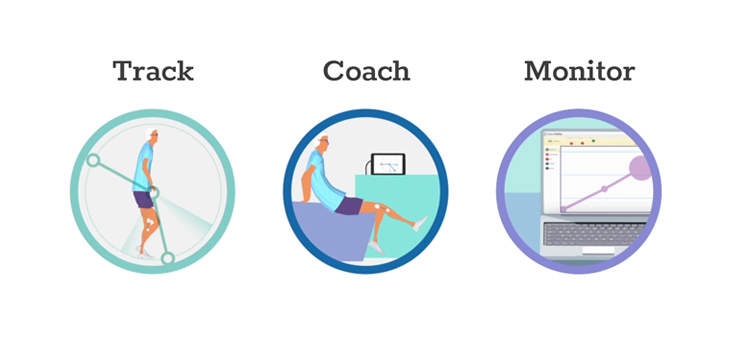
“Patients are given a wearable sensor and an easy to use tablet; caregivers are provided access to an online dashboard that allows them to monitor patients remotely 24/7.”
CEO Geof Auchinleck said: “The thought of total knee replacement surgery can be a source of anxiety for a lot of patients, especially those over the age of 65. Claris Reflex removes this fear and allows patients to confidently and independently manage their pre and post-surgical recovery in their own home. Claris Reflex benefits everyone—first and foremost the patients, but also the clinicians, hospitals, and care providers.”
Asked for details on the Claris Reflex coaching, Auchinleck told OTW, “Claris Reflex allows care providers (typically physical therapists [PT]) to configure the most appropriate rehabilitation plan for each patient, or select from a pre-configured list of care templates.”
“For patients, they are prompted each day by the Claris Reflex tablet about their post-op rehab regimen including exercises, range of motion tests, icing, pain scale surveys, and various health checks. These daily activities, as well as their recovery goals, change over time to keep patients motivated and on track.”
“If patients continue to struggle with their automated recovery, personalized coaching can be delivered via the Claris Reflex tablet in the form of video calls with their PT, messaging with photo sharing, and custom videos.”
“On average, post-acute care costs make up 43% of the total cost for TKA procedures. Claris Reflex helps surgeons reduce these costs for patients covered by the new bundled payments for total joint replacement programs (BPCI, CJR and private insurers) by improving patient compliance and providing 24/7 monitoring of patients at home.”
“Claris Reflex is also the first system to gather 24/7 data about the patient’s recovery activity at home. We are excited by the opportunity to use this data to better inform surgeons and patients about the ideal recovery protocol for various patient populations.”
Author
React:
Discussion
This is a fascinating development. In my practice we've seen similar outcomes with the revised protocol. The key differentiator seems to be patient selection criteria. Has anyone else noticed the correlation with BMI thresholds?
Great point. I'd push back slightly on the conclusion, the sample size in the cited study is too small to draw population-level inferences. That said, the directional signal is compelling and worth a larger RCT.
We implemented a similar approach last year. Early results are promising but we're still gathering 12-month follow-up data. Happy to share our protocol if anyone is interested.
Join the conversation
Orthopedic professionals are discussing this. Sign in and upgrade to read every comment and add your voice.