
Some post-surgical knee patients at the Campbell Clinic in Memphis, Tennessee, will have another pain management option going forward.
Campbell Clinic Testing iovera° Pain Management System
2 min read Premium comments
Secondary
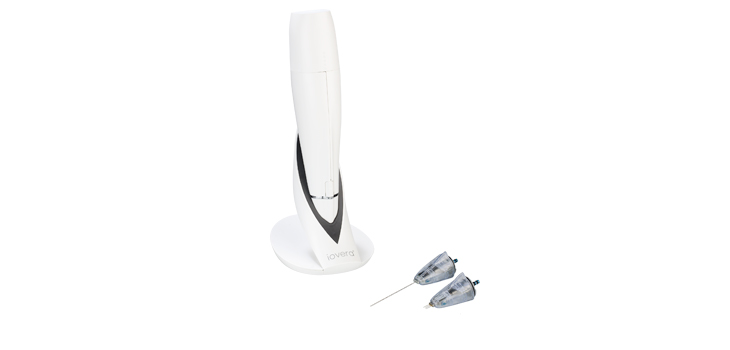
That’s because the clinic is now enrolling patients in a clinical trial to study the effect of the iovera° system, a non-opioid, non-systemic treatment that blocks pain signals from peripheral nerves in knee arthroplasty patients.
Fremont, California-based Myoscience, Inc. manufactures the iovera° system.
According to Myoscience, “One hundred twenty patients are to be enrolled in this trial. Patients will be randomized 1:1. Patients in the study arm will receive iovera therapy in the index knee 3 – 7 days before total knee arthroplasty, while patients in the control arm will receive current standard of care (without the iovera therapy).”
William M. Mihalko, M.D., principal investigator in this trial, stated: “At Campbell Clinic, we carefully evaluate new technologies to solve challenging clinical issues, and to improve patient outcomes. I am very excited to begin enrolling patients in the iovera° study looking at reducing pain and narcotic use after total knee replacement.”
“I look forward to seeing the data from this study, which I hope will confirm all our findings and experiences to date. We hope the iovera° technology will help us meet one of the significant needs today—reducing the reliance on opioid based pain medication after total knee replacement surgery.”
Cary G. Vance, Myoscience president and CEO, told OTW, “Myoscience prides itself in adapting cryotherapy, a 50-year-old technology, to provide a simple non-opioid solution to manage pain.”
“Patients and providers, customers and clinicians, have been unwittingly waiting for what we have in the iovera° technology. Clinicians and their patients no longer have to limit their options for treating their chronic and perioperative pain to opioids. The iovera° therapy provides a safe and effective pain management modality without any of the side effects of opioids.”
“It is the only treatment that can help manage pain by treating superficial nerves without any narcotics or opioids. The iovera° therapy applies focused cold to target nerves by controlling the temperature and duration of treatment, which helps avoid any collateral tissue damage. The iovera° therapy provides immediate relief that usually lasts several months.”
“The iovera° therapy is a non-opioid modality for treating both perioperative pain and chronic pain. Patients who are still suffering from surgical pain after their total knee replacement can significantly benefit from this therapy. Also, patients who are not eligible for total knee replacement may receive this treatment to help them maintain their lifestyle. A comprehensive clinical study has shown that the iovera° therapy is effective in providing pain relief for 90 days. Several patients in this study continued to see pain relief for more than 150 days after receiving the iovera° therapy.”
Author
React:
Discussion
This is a fascinating development. In my practice we've seen similar outcomes with the revised protocol. The key differentiator seems to be patient selection criteria. Has anyone else noticed the correlation with BMI thresholds?
Great point. I'd push back slightly on the conclusion, the sample size in the cited study is too small to draw population-level inferences. That said, the directional signal is compelling and worth a larger RCT.
We implemented a similar approach last year. Early results are promising but we're still gathering 12-month follow-up data. Happy to share our protocol if anyone is interested.
Join the conversation
Orthopedic professionals are discussing this. Sign in and upgrade to read every comment and add your voice.