
A knee joint replacement that went terribly wrong led to the amputation of Nikki Grace-Strader’s leg below the knee. “I had that knee replacement and unfortunately it didn’t work. It failed,” said Nikki, “So, I needed to have a revision to the replacement. I did that in May of 2015. I got a post-operative infection which became septic. That infection eventually lead to the loss of my leg.”
Amputee Organizes Peer Group Visits to Speed Recovery
1 min read Premium comments
Secondary
Nikki’s leg was amputated in Chicago, where she received support from other amputees. This support, she said, was vital to her recovery. When she returned to her home in Champaign, Illinois, that support was missing. “When I got here all those peer visits stopped,” says Nikki. “There were no longer people coming to see me who had shared experience in amputation.”
“How do you go forward,” asked Sanjiv Jain, M.D., physical medicine and rehabilitation physician at Carle Hospital in Champaign. “We have to figure out what’s going to be the best method to re-gain the mobility.”
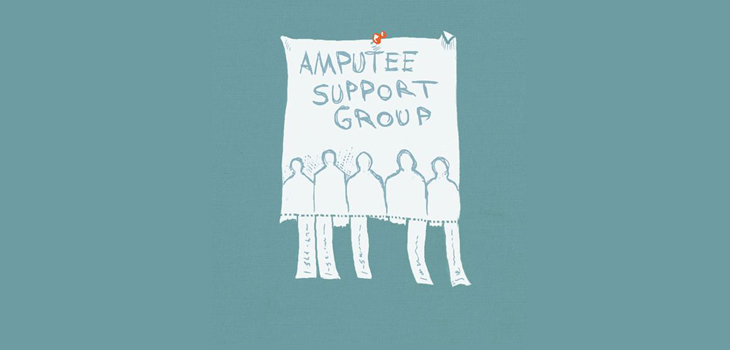
Nikki began researching and discovered that there was almost a 200-mile area around Champaign that had zero support groups for amputees. “There were no peer visitors in the area—there just wasn’t anything,” she said.
So she decided to start Central Illinois Amputees. “It’s not uncommon to get depressed or overwhelmed,” says Nikki. “I think by having peer amputees available to answer those questions, and to help set those realistic and measurable goals is going to help people be successful in life after limb loss.”
Central Illinois Amputees first meeting was held on November 15, 2017 in the rehabilitation activity room located in Carle Hospital in Champaign.
Author
React:
Discussion
This is a fascinating development. In my practice we've seen similar outcomes with the revised protocol. The key differentiator seems to be patient selection criteria. Has anyone else noticed the correlation with BMI thresholds?
Great point. I'd push back slightly on the conclusion, the sample size in the cited study is too small to draw population-level inferences. That said, the directional signal is compelling and worth a larger RCT.
We implemented a similar approach last year. Early results are promising but we're still gathering 12-month follow-up data. Happy to share our protocol if anyone is interested.
Join the conversation
Orthopedic professionals are discussing this. Sign in and upgrade to read every comment and add your voice.