
MMJ Labs LLC, a women-owned company in Atlanta, Georgia, has been awarded U.S. patent number 9,358,152 which relates to and identifies the firm’s pain management program.
Unique Pain Management Program Gets U.S. Patent
1 min read Premium comments
Secondary
MMJ Labs patent portfolio is supported by research into the synergizing effects of thermal and vibrational stimulation to combat pain.
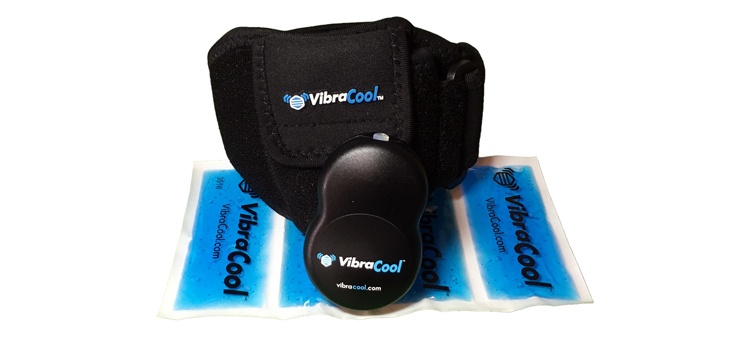
Company officials explain that their VibraCool® vibrational cryotherapy device is being used not only for muscle recovery, but for chronic pain relief and to avoid opioids. The research underpinning the patent filings shows vibration speeds repair tissue at a cellular level.
Cool-Pulse™ technology, developed in part with funding from the National Institute of Health (NIH) Small Business Innovative Research program, combines high frequency, low amplitude vibration with a thermal treatment pack that adds cooling to disrupt nerve impulses of pain.
“We are thrilled about the profound effects our straightforward reusable technology can have on reducing pain medication dependence,” said Amy Baxter, M.D., who is the founder and CEO of MMJ Labs. “Understanding the multiple ways that vibration and thermal sources can interact directly to alter nerve signals is a huge step forward for post-surgical pain management, sports recovery, and chronic pain.”
MMJ Labs, LLC, is a small business researching, developing, and delivering pain relief medical devices to hospitals and patients worldwide. MMJ Labs products have unique FDA product codes as Class I medical devices, with CE clearance and acceptance by ANVISA, KFDA, and Australia and New Zealand health boards.
Author
React:
Discussion
This is a fascinating development. In my practice we've seen similar outcomes with the revised protocol. The key differentiator seems to be patient selection criteria. Has anyone else noticed the correlation with BMI thresholds?
Great point. I'd push back slightly on the conclusion, the sample size in the cited study is too small to draw population-level inferences. That said, the directional signal is compelling and worth a larger RCT.
We implemented a similar approach last year. Early results are promising but we're still gathering 12-month follow-up data. Happy to share our protocol if anyone is interested.
Join the conversation
Orthopedic professionals are discussing this. Sign in and upgrade to read every comment and add your voice.