
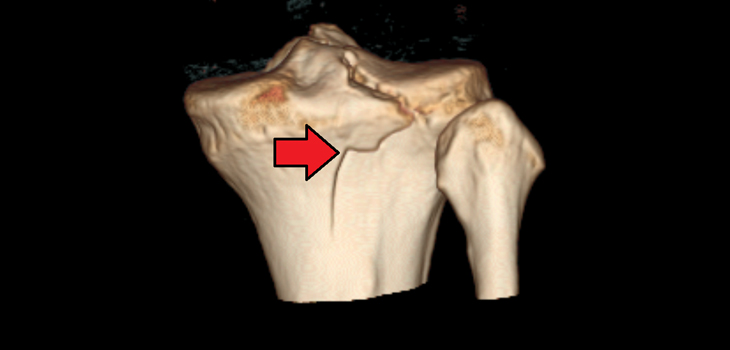
In a new retrospective cohort study from New York, researchers teased out the question of whether a patient’s socioeconomic status affects treatment outcomes when caring for patients who have tibial plateau fractures.
Tibial Plateau Fracture: Race, Ethnicity Don’t Affect Outcomes
2 min read Premium comments
Secondary
The study, “Race and Ethnicity Have a Mixed Effect on the Treatment of Tibial Plateau Fractures,” was published in the October 3, 2017 edition of the Journal of Orthopaedic Trauma.
Kenneth Egol, M.D. is an orthopedic trauma surgeon at New York University (NYU) Hospital for Joint Diseases. Dr. Egol commented to OTW, “Tibial plateau fractures are a very common injury seen in our community. Given the varied mechanisms of injury that lead to this fracture pattern, such as pedestrian struck, fall from height or motor vehicle accident as well as the very diverse patient population we treat, we felt we had the ability to address the quality/patient safety issue related to this injury pattern.”
“We have been studying these injuries closely for the last 12-15 years. We have developed a very robust clinical database of a large consecutive group of patients who have been treated at our institution during that time. We have very granular data with regards to demographics and outcomes. We are very committed to patient reported outcomes and quality improvement and try to use these data to improve our practices.”
The study included 13,518 individuals with isolated tibial plateau fractures: white, African American, Hispanic, and other. Patients underwent closed treatment and operative fixation of the tibial plateau.
Dr. Egol, also director of the orthopedic surgery residency program at NYU Langone, told OTW, “In some areas of medicine it has been demonstrated that treatments and results are disparate based on patient’s sociodemographic factors. What is important to understand from this work is that although some racial and demographic characteristics correlate with differing injury patterns and discharge planning, tibial plateau fracture patients’ treatment, quality and outcomes are not affected by race and ethnicity.”
“Unlike other areas of medicine that rely on less acute decision making, orthopedic trauma surgeons only take injury factors into consideration when developing treatment plans for patients who sustain trauma. We believe these results can likely be extrapolated to other areas of fracture care.”
“Patients and the physicians who treat them should feel comfortable that they have access to high quality fracture care regardless of their socioeconomic or racial status.”
Author
React:
Discussion
This is a fascinating development. In my practice we've seen similar outcomes with the revised protocol. The key differentiator seems to be patient selection criteria. Has anyone else noticed the correlation with BMI thresholds?
Great point. I'd push back slightly on the conclusion, the sample size in the cited study is too small to draw population-level inferences. That said, the directional signal is compelling and worth a larger RCT.
We implemented a similar approach last year. Early results are promising but we're still gathering 12-month follow-up data. Happy to share our protocol if anyone is interested.
Join the conversation
Orthopedic professionals are discussing this. Sign in and upgrade to read every comment and add your voice.