
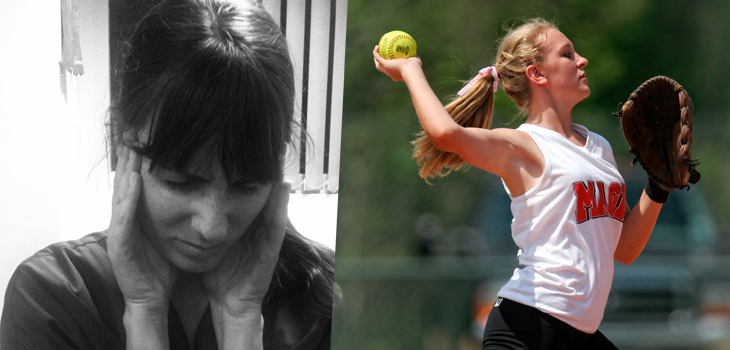
A new study, “First-Time Sports-Related Concussion Recovery: The Role of Sex, Age, and Sport”, in the October 2017 issue of The Journal of the American Osteopathic Association suggests that adolescent female athletes suffer concussion symptoms for twice as long as male athletes at the same age, and the culprit might be underlying conditions like migraines, depression, anxiety and stress.
Sports-Related Concussions Linger Longer in Adolescent Girls
1 min read Premium comments
Secondary
The researchers collected data from the medical records of 110 male and 102 female athletes between the ages of 11 and 18 who have experienced a first-time concussion. According to the data, the median duration of symptoms was 11 days for boys and 28 days for girls. In addition, at the three week point after concussion, 75% of the boys were symptom free compared to 42% of girls.
“These findings confirm what many in sports medicine have believed for some time,” said John Neidecker, DO, a sports concussion specialist with Orthopaedic Specialists of North Carolina in Raleigh, North Carolina said in a press release.
“It highlights the need to take a whole person approach to managing concussions, looking beyond the injury to understand the mental and emotional impacts on recovery when symptoms persist.”
Earlier research has shown that concussion can worsen pre-existing conditions like headaches, depression and stress which tend to be prevalent in girls and can exhibit similar symptoms to concussions. This according to the release highlights the need for getting a full patient history to truly understand all that is going on with the patient.
“Often in this age range, issues like migraines, depression and anxiety have not yet been diagnosed,” said Neidecker. “So, if I ask a patient whether they have one of these conditions, they’re likely to say ‘No’. But when I ask about their experiences, I get a much clearer picture.”
Author
React:
Discussion
This is a fascinating development. In my practice we've seen similar outcomes with the revised protocol. The key differentiator seems to be patient selection criteria. Has anyone else noticed the correlation with BMI thresholds?
Great point. I'd push back slightly on the conclusion, the sample size in the cited study is too small to draw population-level inferences. That said, the directional signal is compelling and worth a larger RCT.
We implemented a similar approach last year. Early results are promising but we're still gathering 12-month follow-up data. Happy to share our protocol if anyone is interested.
Join the conversation
Orthopedic professionals are discussing this. Sign in and upgrade to read every comment and add your voice.