
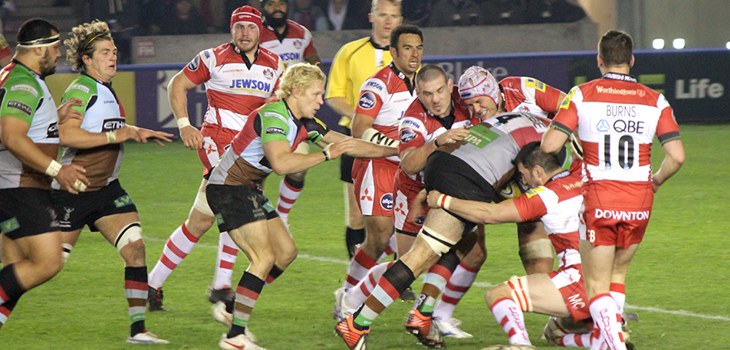
Is the game of rugby hazardous to the health of the players?
Rugby Studied for Player Injuries
1 min read Premium comments
Secondary
In a new study by researchers from the Arthritis Research UK Centre for Sport, Exercise and Osteoarthritis, researchers from the University of Oxford and the Department for Health have discovered that former elite, male rugby players are at a greater risk of suffering from osteoarthritis, joint replacement and osteoporosis, than members of the general population.
The study, published in the journal Scientific Reports, compared the health outcomes between 259 former elite players and 5,186 participants in the English Longitudinal Study of Ageing. In addition, the authors compared health-related quality of life between former players and 2,981 participants from the Health Survey for England.
They found that rugby players aged 50 and above were more likely to suffer from physician-diagnosed osteoarthritis, site-specific joint replacement at the hip and knee, and osteoporosis. The rugby players reported problems in mobility, self-care, and pain or discomfort, but not for anxiety or depression.
Despite this finding, 95% of former rugby players reported that they would do the same again and, considering the risks and benefits of their previous participation, 78% would recommend the sport to their children, relatives and close friends.
Lead researcher and doctoral student Madi Davies, from the Nuffield Department of Orthopaedics, Rheumatology and Musculoskeletal Systems at the University of Oxford, explained: “Over the last few years, there has been an increasing focus on the long-term effects of sports participation, which is crucial to inform healthy play, and aging, for former sports people. We are pleased to present our first study findings in Scientific Reports, to support on-going dialogue and the development of best practice for longer term athlete care, following sports participation.”
Author
React:
Discussion
This is a fascinating development. In my practice we've seen similar outcomes with the revised protocol. The key differentiator seems to be patient selection criteria. Has anyone else noticed the correlation with BMI thresholds?
Great point. I'd push back slightly on the conclusion, the sample size in the cited study is too small to draw population-level inferences. That said, the directional signal is compelling and worth a larger RCT.
We implemented a similar approach last year. Early results are promising but we're still gathering 12-month follow-up data. Happy to share our protocol if anyone is interested.
Join the conversation
Orthopedic professionals are discussing this. Sign in and upgrade to read every comment and add your voice.