
Össur, headquartered in Iceland, has launched its latest bracing technology: Unloader One Lite.
Össur Launches Unloader One Lite Brace
2 min read Premium comments
Secondary
As the company says in its October 2, 2017 news release, this brace “…is specifically intended for patients suffering from mild-to-moderate knee pain associated with osteoarthritis (OA) and degenerative meniscal tears.”
“Össur’s Unloader brand is synonymous with osteoarthritis knee bracing because we have dedicated more than three decades to developing innovative bracing technologies that deliver clinically proven benefits for patients,” said Jason Thorne, Össur’s Vice President of Global Marketing, OA and Injury Solutions.
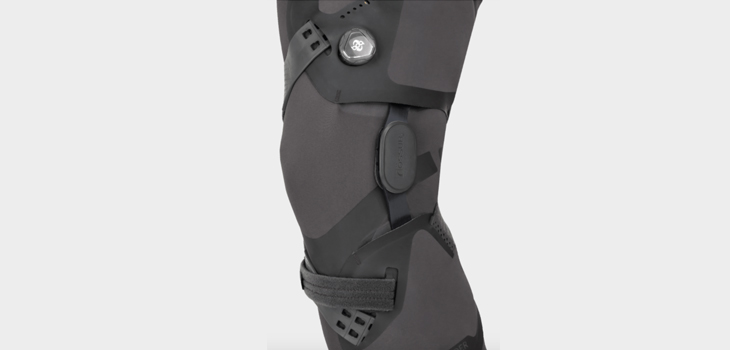
As Thorne indicated in the news release, “the new Unloader One Lite brace is ideal for younger, more physically active patients who are starting to experience early symptoms of knee OA and degenerative meniscal tears. Unloader One Lite features a sleek, low-profile design and is six ounces lighter than the classic Unloader One brace, which was designed to provide support for patients with moderate-to-severe knee OA. Unloader One Lite also features Össur’s clinically proven 3-Points of Leverage design, including dual Dynamic Force straps that are easily fine-tuned via a BOA SmartDosing system.”
“Unloader One Lite is the first unloading brace to be clinically-proven as an effective treatment for patients with degenerative meniscal tears, which is classified as a pre-OA condition. Recent clinical trials have shown non-operative treatment of degenerative meniscal tears are an effective treatment option with good clinical outcomes in cases where partial meniscectomy is not indicated. Unloader One Lite provides unloading of the affected compartment, reducing patients’ pain and improving function.”
Asked how they were able to make the brace six ounces lighter, Jason Thorne told OTW, “We know that weight is a key ingredient for patient outcomes. Through innovative manufacturing methods we have been able to simplify and streamline the Unloader One Lite to achieve an efficient balance of form and function. By eliminating traditional rivets and screws we have been able to create a brace that fits intimately and optimizes patient comfort. We are confident we are introducing a lightweight solution that advances compliance and provides the best possible outcomes for pain relief and improved function.”
“Össur is committed to improving patient comfort and compliance by continuing to lead innovation in osteoarthritis bracing. This Unloader One Lite is designed to provide pain relief and improved function in patients suffering degenerative meniscal tears, as well as mild to moderate knee osteoarthritis. Through advancements in technology, osteoarthritis knee bracing has continuously improved to promote compliance and better patient outcomes.”
Author
React:
Discussion
This is a fascinating development. In my practice we've seen similar outcomes with the revised protocol. The key differentiator seems to be patient selection criteria. Has anyone else noticed the correlation with BMI thresholds?
Great point. I'd push back slightly on the conclusion, the sample size in the cited study is too small to draw population-level inferences. That said, the directional signal is compelling and worth a larger RCT.
We implemented a similar approach last year. Early results are promising but we're still gathering 12-month follow-up data. Happy to share our protocol if anyone is interested.
Join the conversation
Orthopedic professionals are discussing this. Sign in and upgrade to read every comment and add your voice.