
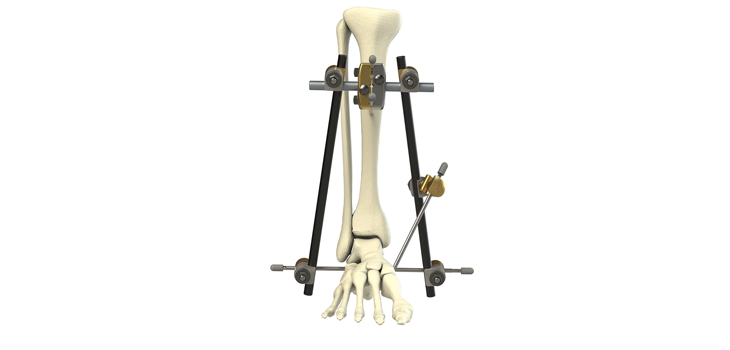
Reno, Nevada-based Orthopaedic Implant Company (“OIC”) has just launched the OIC External Fixation System at the 2017 Annual Meeting of the Orthopaedic Trauma Association in Vancouver.
OIC Launches External Fixator System
1 min read Premium comments
Secondary
“External fixators are one of the most expensive devices in use today. Furthermore, they provide provisional fixation which means additional device expenses follow. Helping alleviate these costs will have incredible impact for providers and patients,” said Todd Martens, vice president of product design and customer experience, at OIC, in the October 13, 2017 news release. “We tasked ourselves with raising the bar (and pin) for value in external fixation and the result is a simple and intuitive system offering all of the options required by today’s top surgeons.”
As the company wrote in its news release, “The OIC External Fixator System offers a patent pending single clamp system that allows for bar-to-bar or bar-to-pin construction and has a multi-hole clamp option with straight and bent posts. It includes 5mm self-tapping and blunt half-pins and contains carbon fiber bars. The product is manufactured from non-ferrous materials in the U.S.”
Peter Althausen M.D., M.B.A. is chairman and treasurer of OIC. He told OTW, “The most interesting and challenging moment during the development phase occurred during the design for manufacturability process. During this process we worked with our manufacturing team to minimize costly features or even replace with fewer components, but yet maintain the clinical requirements of the device in general. Overall, this process yields cost effective designs that meets all the clinical needs that the surgeon expects.”
“OIC’s External Fixation System offers a solution that provides the same quality as other brands, but allows surgeons to advocate for their patients in another way. This system gives the patient an equivalent product for significantly less financial cost. This product will be helpful for patients and providers alike and we are proud to make this product available.”
Author
React:
Discussion
This is a fascinating development. In my practice we've seen similar outcomes with the revised protocol. The key differentiator seems to be patient selection criteria. Has anyone else noticed the correlation with BMI thresholds?
Great point. I'd push back slightly on the conclusion, the sample size in the cited study is too small to draw population-level inferences. That said, the directional signal is compelling and worth a larger RCT.
We implemented a similar approach last year. Early results are promising but we're still gathering 12-month follow-up data. Happy to share our protocol if anyone is interested.
Join the conversation
Orthopedic professionals are discussing this. Sign in and upgrade to read every comment and add your voice.