
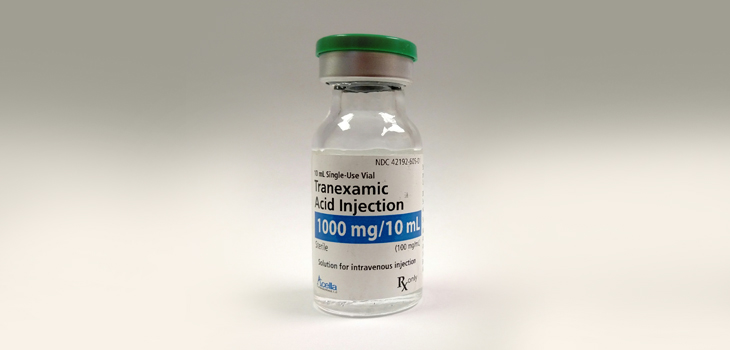
New research from Hospital for Special Surgery (HSS), Brigham and Women’s Hospital, Beth Israel Deaconess and Weill Cornell Medical College/Presbyterian Hospital adds more support for tranexamic acid (TXA) for orthopedic trauma patients.
Less Blood Loss, Fewer Transfusions in TXA Trauma Patients
2 min read Premium comments
Secondary
Their work, “Tranexamic Acid in Orthopaedic Trauma Surgery: A Meta-Analysis,” appears in the Ocotber 2017 edition of The Journal of Orthopaedic Trauma.
Elizabeth B. Gausden, M.D., an orthopedic surgery resident at HSS, commented to OTW, “Tranexamic acid (TXA) has become widely used in other areas of orthopaedics, but still is not common practice in orthopaedic trauma. It was the right time to review and analyze the current body of literature available on the use of TXA in orthopaedic trauma in order to build awareness and interest in further research.”
“The study was born from a project in a Masters of Public Health class that a number of the co-authors (myself, Rameez Qudsi, Brian O’Gara and Myles Boone) were taking last summer on designing meta-analyses. We are a group of orthopaedic residents and anesthesiologists so it was a topic of interest for all of us. The limitation was the number of studies that were currently presented. At the time, not many studies were published fully, so we decided to include abstracts and data available on clinicaltrials.gov in order to increase the number of patients included.”
“The reduction in blood loss and transfusion in patients treated with TXA is significant, while there appears to be no difference in risk of thromboembolic events with TXA. At this time, we recommend that surgeons and anesthesiologists consider the perioperative administration of TXA for orthopaedic trauma patients without significant pre-injury risk factors for thromboembolic events.”
Asked how they might pursue further research, Dr. Gausden told OTW, “We need more studies to properly assess risk of thromboembolic events in patients treated with TXA. The best way to approach this would be to do a multicenter prospective study using TXA in trauma patients and prospectively measure rate of thromboembolic events. Additional research is needed to analyze which patients should NOT receive TXA as this is highly variable from center to center (i.e., patients with coronary artery disease, history of stroke, history of deep vein thrombosis or pulmonary embolism, etc.). There is also more interest in alternative antifibrinolytics (aminocaproic acid) that could also be used in trauma patients and may be more accessible depending on institution.”
Author
React:
Discussion
This is a fascinating development. In my practice we've seen similar outcomes with the revised protocol. The key differentiator seems to be patient selection criteria. Has anyone else noticed the correlation with BMI thresholds?
Great point. I'd push back slightly on the conclusion, the sample size in the cited study is too small to draw population-level inferences. That said, the directional signal is compelling and worth a larger RCT.
We implemented a similar approach last year. Early results are promising but we're still gathering 12-month follow-up data. Happy to share our protocol if anyone is interested.
Join the conversation
Orthopedic professionals are discussing this. Sign in and upgrade to read every comment and add your voice.