
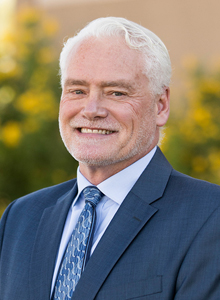
Kelly Krohn, M.D. has been named medical director of The CORE Institute, based in Phoenix, Arizona. Dr. Krohn is a rheumatologist who specializes in non-surgical management of knee osteoarthritis, fracture healing, and complex metabolic bone diseases.
Kelly Krohn, M.D. New Medical Director of The CORE Institute
2 min read Premium comments
#coreinstitute#orthopedics#kellykrohn
“Dr. Krohn is a well-respected rheumatologist who remains active in academic research and contributes to numerous journal articles, abstracts, and book chapters,” said Steve Myerthall, M.D. and market president at The CORE Institute, in the October 9, 2017 news release. “He is a valuable addition to our clinical team as well as patients in need of management and non-surgical treatment options for those suffering from osteoarthritis and complex metabolic bone health diseases.”
As the company wrote in its news release, “Dr. Krohn is a recipient of numerous awards for his work in rheumatology. He served as the Senior Medical Advisor for Eli Lilly between 2006 and 2016 with primary responsibility over the Forteo osteoporosis medical team. Prior to his role at Eli Lilly, he served as Director of Clinical Research at Mercy Hospital in Pittsburgh and as the Rheumatology Fellowship Program Director at the Oregon Health and Sciences University. During his time in Oregon, Dr. Krohn also served as the team physician for the Portland Rockies as part of the Colorado Rockies medical team.”
Dr. Krohn did a rheumatology fellowship at Indiana University and an internal medicine residency at Creighton University. He also received his medical degree from Creighton and his bachelor’s degree from Jamestown College. Dr. Krohn is a member of several professional organizations, including the Orthopaedic Trauma Association, Orthopaedic Research Society, American College of Rheumatology, and the American Society of Bone and Mineral Research.
Dr. Krohn told OTW, “I have spent over 25 years in academic clinical practices in Oregon, Colorado and Pennsylvania. I focus my practice on non-surgical treatment of knee arthritis with emphasis on exercise, weight loss, knee braces and knee injections.”
“I have been involved in bone health/osteoporosis diagnosis and management for almost 30 years with extensive clinical and clinical research experience. I have also spent 10 years working in the pharmaceutical industry with responsibility for one of the main anabolic drugs for osteoporosis throughout the world. During that time, I was involved in many clinical research studies as well as consulting routinely with practicing physicians on their complex patients with bone issues.”
“My goal is to grow the bone health program into the best program in the Phoenix area with a strong team of mid-levels, nurses, research coordinators, medical and orthopedic physicians who specialize in management of bone issues. We will see patients who have fractures to reduce risk of future fractures. We will see patients who are scheduled for elective orthopedic surgeries to evaluate their bone health and when appropriate treat their bone disease with the goal of reducing complications of the scheduled orthopedic surgery.”
Author
React:
Discussion
This is a fascinating development. In my practice we've seen similar outcomes with the revised protocol. The key differentiator seems to be patient selection criteria. Has anyone else noticed the correlation with BMI thresholds?
Great point. I'd push back slightly on the conclusion, the sample size in the cited study is too small to draw population-level inferences. That said, the directional signal is compelling and worth a larger RCT.
We implemented a similar approach last year. Early results are promising but we're still gathering 12-month follow-up data. Happy to share our protocol if anyone is interested.
Join the conversation
Orthopedic professionals are discussing this. Sign in and upgrade to read every comment and add your voice.