
Scientists at Children’s Hospital of Philadelphia (CHOP) have found that an existing drug candidate blocks abnormal protein signals and is a promising step toward creating the first pharmacologic treatment for hereditary multiple exostoses (HME).
Promising Treatment for Rare Bone Disease HME
2 min read Premium comments
Secondary
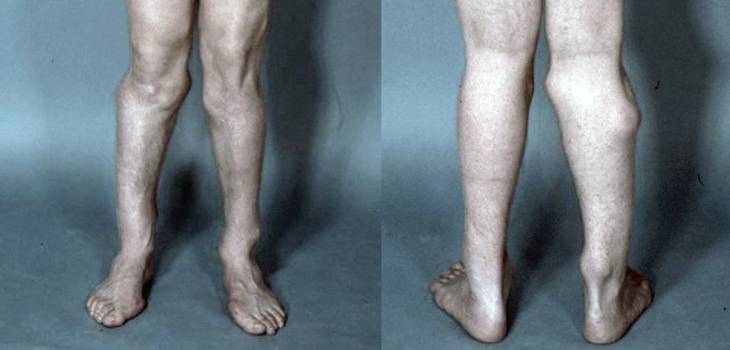
In an August 29, 2017 news release, CHOP said, “HME causes multiple, disabling bone outgrowths (called exostoses or osteochondromas) and skeletal deformities, and such drugs could potentially spare patients the prospect of numerous, sometimes difficult childhood surgeries, while also reducing their risk of cancer.”
“There are no current drug treatments for HME, in which numerous, painful and disfiguring osteochondromas form throughout the skeleton in children and adolescents, sometimes turning malignant,” said study leader Maurizio Pacifici, Ph.D., a developmental biologist and director of Orthopaedic Research at CHOP. “In a proof-of-principle study, we showed that a signal-blocking compound stops these tumors in animal models of the disease. That compound or similar drugs blocking the same biological pathway could thus become the first-ever pharmacological treatment for HME.”
Dr. Pacifici also researches a rare genetic bone disease called fibrodysplasia ossificans progressiva (FOP). As CHOP indicates in its news release, “Based on extensive animal studies by Pacifici and colleagues at the University of Pennsylvania, Clementia Pharmaceuticals is currently testing the drug palovarotene in a phase 2 clinical trial of patients with FOP. Palovarotene’s action includes inhibition of the BMP signaling pathway.”
Dr. Pacifici told OTW, “Currently, there is no pharmacologic treatment by which the formation of osteochondromas could be prevented in patients with HME (which is also called Multiple Osteochondromas (MO). Surgery is used to remove the most symptomatic osteochondromas in patients, but many such tumors are often left in place causing life-long problems. Thus, a pharmacologic treatment blocking osteochondroma formation could provide a more effective therapy for HME patients.”
“The study made use of animal (mouse) models of HME/MO that, however, were similar to those used in previous studies (and thus not particularly new). However, the clinical data included in the study are totally new. By re-examining archival CT scans [computed tomography], we and our collaborators found that osteochondroma-like lesions are present in the cranial base of about 50% of HME/MO patients examined. This skeletal structure had not been investigated previously. The pathological implications of the findings—if any—are unclear at the moment and require further dedicated studies.”
“Our study is the first to provide proof-of-principle evidence that the formation of osteochondromas can be inhibited by systemic drug treatment in animal models of HME/MO. This is a first critical step that provides the rationale to conceive and organize a clinical trial in the future.”
“It is important that orthopedic surgeons know that most skeletal structures—including the cranial base—can be affected in HME/MO patients. Our data may encourage dedicated studies to examine possible health implications of cranial base abnormalities in HME patients.”
Note: Dr. Pacifici is a consultant to Clementia Pharmaceuticals for studies of FOP. He also holds a patent for a method of targeting the enzyme heparanase as a possible treatment for HME/MO.
Author
React:
Discussion
This is a fascinating development. In my practice we've seen similar outcomes with the revised protocol. The key differentiator seems to be patient selection criteria. Has anyone else noticed the correlation with BMI thresholds?
Great point. I'd push back slightly on the conclusion, the sample size in the cited study is too small to draw population-level inferences. That said, the directional signal is compelling and worth a larger RCT.
We implemented a similar approach last year. Early results are promising but we're still gathering 12-month follow-up data. Happy to share our protocol if anyone is interested.
Join the conversation
Orthopedic professionals are discussing this. Sign in and upgrade to read every comment and add your voice.