
According to MarketsandMarkets, the orthopedic braces and supports market products is on a trajectory to reach $4.93 billion in annual sales by 2022. That’s up from the current $3.76 billion figure of 2017.
Orthopedics Braces Market Forecast to Hit $4.93 Billion
2 min read Premium comments
Secondary
In the research report “Orthopedic Braces and Supports Market by Product (Lower Extremity (Knee, Foot, Ankle, Back), Upper Extremity (Shoulder, Elbow, Wrist), Application (Ligament Injury, Preventative Care, Osteoarthritis), End User (Hospitals OTC) – Global Forecast to 2022,” that’s a compound annual growth rate (CAGR) of 5.6% in the next five years.
Key factors driving this growth include the increased diagnoses of musculoskeletal diseases and disorders, a boost in the geriatric population (particularly due to the aging baby boomers in the United States), and a spike in athletic/sports participation.
As more people engage in sports for fun and fitness, such as CrossFit, naturally the incidents of sports-related injuries will increase. These three primary factors are pushing up the market for orthopedic braces. There’s also an increase in the online sales of such devices.
Researchers predict that lower extremity supports and braces will experience the most growth by 2022. The authors of the study note that much of the expected growth is due to an increase in diabetes and obesity as well as a comparatively benign reimbursement environment as compared to upper extremity cases.
There has been a growth in knee and hip replacement surgeries around the globe, which also drives the lower extremity injury, support and brace growth.
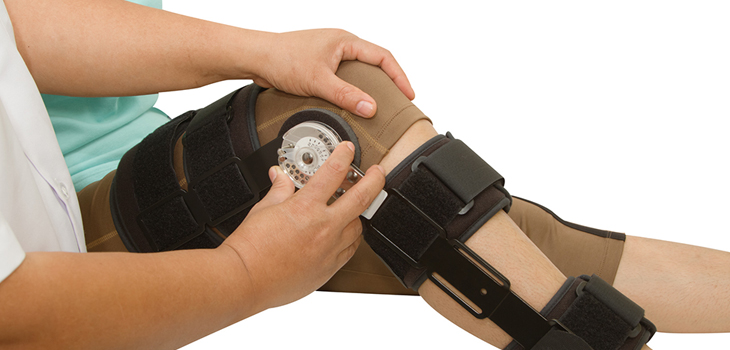
Soft and elastic supports/braces are the most popular. Other options include hinged, hard and rigid braces/supports. The authors of the study point out that soft and elastic braces are more comfortable, more recommended by doctors and are typically preferred by patients for preventative and post-operative care.
Specifically, ligament injuries make up the majority of injuries that benefit from soft/elastic braces and supports. The authors posit that this trend can be expected to continue through 2022.
The bracing market segments covered in the study included: Preventative care, post-operative rehabilitation, ligament injury, osteoarthritis and “other applications” which can include osteoporosis, spinal degenerative conditions, and Paget’s disease.
However, ligament injuries are expected to remain the most common thanks to their medical reimbursement “friendliness” and high incidence rates. Surgical centers and hospitals are expected to experience the fastest growth in the next five years, with orthopedic clinics coming in third. Unsurprisingly, North America is the largest market for orthopedic braces/support market.
Author
React:
Discussion
This is a fascinating development. In my practice we've seen similar outcomes with the revised protocol. The key differentiator seems to be patient selection criteria. Has anyone else noticed the correlation with BMI thresholds?
Great point. I'd push back slightly on the conclusion, the sample size in the cited study is too small to draw population-level inferences. That said, the directional signal is compelling and worth a larger RCT.
We implemented a similar approach last year. Early results are promising but we're still gathering 12-month follow-up data. Happy to share our protocol if anyone is interested.
Join the conversation
Orthopedic professionals are discussing this. Sign in and upgrade to read every comment and add your voice.