
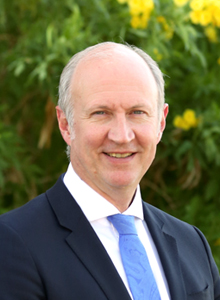
Michael McKee, M.D., a trauma and upper extremity surgeon, has joined the Phoenix, Arizona-based CORE Institute’s Orthopedic and Spine Institute.
Michael McKee, M.D. Joins CORE Institute
1 min read Premium comments
#coreinstitute#michaelmckee
“Dr. McKee is a world-renowned surgeon who has received numerous awards and distinctions for his research in orthopedic trauma, and we are excited he has chosen to join our team at The CORE Institute,” said David Jacofsky, M.D., chairman and chief executive officer of The CORE Institute, in the company’s August 28, 2017 news release. “Dr. McKee is a valuable addition to our trauma team and academic program at the Orthopedic and Spine Institute.”
The company added, “Dr. McKee remains a consistent leader in the orthopedic field having been recognized for numerous awards in the healthcare field. He participates in, and leads, several controlled and multicenter trials; peer-reviewed research grants and presentations. He is an active guest speaker at many universities and instructs courses on orthopedic trauma both domestically and internationally. Dr. McKee has a prestigious background as a surgeon at St. Michael’s Hospital, as well as a professor of surgery at the University of Toronto in Canada.”
“Dr. McKee completed his fellowship training in orthopedic trauma and lower and upper extremity reconstruction from Massachusetts General Hospital in Boston, Massachusetts and a fellowship at Toronto East General Hospital. He completed his Bachelor’s Degree at University of Toronto in Canada. Dr. McKee is a member of numerous professional associations, including American Orthopedic Association, AO International and Orthopedic Trauma Association.”
Dr. McKee told OTW, “In my new role at the Orthopedic and Spine Institute, I look forward to contributing my academic medicine background as well as my orthopedic trauma experience. We are all here to do one thing, care for patients in a standardized approach and achieving best-in-class outcomes.”
Author
React:
Discussion
This is a fascinating development. In my practice we've seen similar outcomes with the revised protocol. The key differentiator seems to be patient selection criteria. Has anyone else noticed the correlation with BMI thresholds?
Great point. I'd push back slightly on the conclusion, the sample size in the cited study is too small to draw population-level inferences. That said, the directional signal is compelling and worth a larger RCT.
We implemented a similar approach last year. Early results are promising but we're still gathering 12-month follow-up data. Happy to share our protocol if anyone is interested.
Join the conversation
Orthopedic professionals are discussing this. Sign in and upgrade to read every comment and add your voice.