
Expanding Orthopedics Inc. (EOI), based in Or-Akiva, Israel, has announced that it has been granted two additional U.S. patents covering its expandable cage technology.
EOI: Two New U.S. Patents for Expanding Cage Technology
1 min read Premium comments
Secondary
Mark M. Levy, M.D., an orthopedic surgeon, founder and chief technology officer of EOI, said in the company’s August 14, 2017 news release, “These new patents recognize the innovation of our expandable cage technology and proprietary instruments.” He explained that, “The company was founded on the principal of providing innovative, simple to use, products that will benefit both patients and surgeons.”
“These new granted patents continue to fulfill our guiding principal with simple and cleaver instrumentation design and the addition of a new expandable platform, already in development, offering novel expanding mechanism and bone grafting solution as well as great versatility in the type of surgery approaches”.
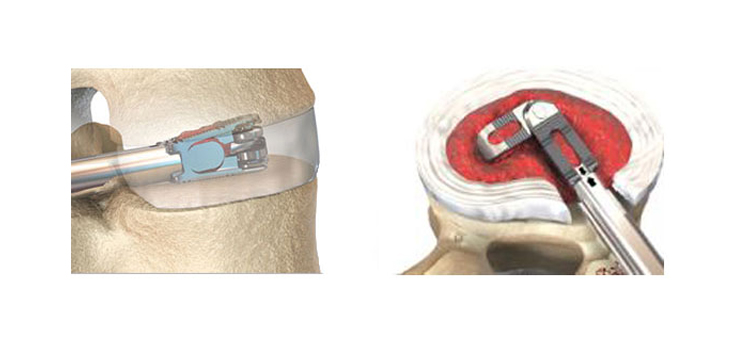
Ofer Bokobza, EOI’s chief executive officer, told OTW, “The first patent relates to the unique delivery system of the FLXfit 3D expandable cage which provide a simple, always connected instrument to deliver an articulated cage and expand it in an angular fashion. The second patent involves a new expandable cage platform that can be delivered from several approaches and possess unique, large range expansion mechanism with massive bone graft window and delivery technique.”
Bokobza noted in the news release, “These new patents strengthen our IP [intellectual property] portfolio of anatomically fit expandable devices and demonstrate our continuous commitment to innovation. We aim to deliver state-of-the-art devices reinforcing our position as a fast growing, expandable devices’ spine company.”
Author
React:
Discussion
This is a fascinating development. In my practice we've seen similar outcomes with the revised protocol. The key differentiator seems to be patient selection criteria. Has anyone else noticed the correlation with BMI thresholds?
Great point. I'd push back slightly on the conclusion, the sample size in the cited study is too small to draw population-level inferences. That said, the directional signal is compelling and worth a larger RCT.
We implemented a similar approach last year. Early results are promising but we're still gathering 12-month follow-up data. Happy to share our protocol if anyone is interested.
Join the conversation
Orthopedic professionals are discussing this. Sign in and upgrade to read every comment and add your voice.