
Germany-based Emerging Implant Technologies GmbH (EIT) recently announced the acquisition of a full patent portfolio of 22 issued and pending patents for 3D printed expandable spinal fusion cages based on living hinges from Morgan P. Lorio, M.D.
EIT Acquires Patent Portfolio for 3D Spinal Fusion Cages
1 min read Premium comments
Secondary
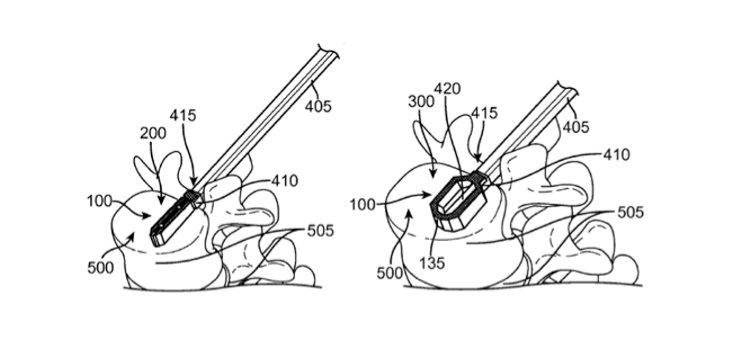
According to a release, these patents cover the United States, Europe and other global markets and provide Emerging Implant Technologies the option to offer a complete product range of fully 3D printed cages for both vertical and lateral expansion.
Dr. Lorio specializes in spine orthopedics and hand surgery at Hughston Clinic Orthopaedics in Nashville, Tennessee. Going through his own spinal injury was the impetus for Lorio becoming an advocate for patients with spinal injuries. His work specifically focuses on cervical spine pathology affecting the upper extremity, artificial discs, motion preservation, and minimally invasive spinal surgery, as well as sacroiliac joint disease and vertebral augmentation in the female spine.
Lorio said in the release, “The combination of 3D printed cellular structures with functionality is disruptive game changing technology. It will give me better tools to restore my patients’ spinal balance and enlarge the cage footprints for better endplate coverage while experiencing faster spinal fusion.”
Guntmar Eisen, CEO of EIT said that they will take the fully 3D printed fusion cages to the next level by adding functionality to their EIT cellular titanium cages.
“This will give the surgeon more options intraoperatively, reduce inventory and support [minimally invasive] techniques—and at the same time reduce cost of expandable cages,” he said.
The porous 3D printing of the titanium used in the cages offers better fusion results compared to the current cages on the market. The design and elasticity of the scaffold encourages bone ingrowth because it is close to the cancellous bone.
The first functional spinal fusion cages based on the patent acquisition will be launched in 2018.
Author
React:
Discussion
This is a fascinating development. In my practice we've seen similar outcomes with the revised protocol. The key differentiator seems to be patient selection criteria. Has anyone else noticed the correlation with BMI thresholds?
Great point. I'd push back slightly on the conclusion, the sample size in the cited study is too small to draw population-level inferences. That said, the directional signal is compelling and worth a larger RCT.
We implemented a similar approach last year. Early results are promising but we're still gathering 12-month follow-up data. Happy to share our protocol if anyone is interested.
Join the conversation
Orthopedic professionals are discussing this. Sign in and upgrade to read every comment and add your voice.