
Knoxville, Tennessee-based ChoiceSpine LP’s TOMCAT Anterior Cervical Discectomy and Fusion (ACDF) procedure has been successfully completed for the 1,000th time.
ChoiceSpine Cervical System Hits 1,000 Procedures
1 min read Premium comments
Secondary
On August 23, 2017, the company announced that the milestone had been reached on a patient at St. Mary’s Hospital in Athens, Georgia, by Julian Price, M.D., a surgeon at the Athens Orthopedic Clinic.
Price said he chose to use the TOMCAT system for all his ACDF procedures because the system provides “streamlined implantation with modular instruments, self-locking retention clip and a hybrid device that eliminates difficult screw trajectories. My clinical outcomes with TOMCAT are excellent as I have experienced early bone growth with the Hydroxyapatite (HA) Enhanced integrated PEEK spacer.”
The company says the system was designed to stabilize and fuse the cervical vertebral column with no profile or low profile anteriorly.
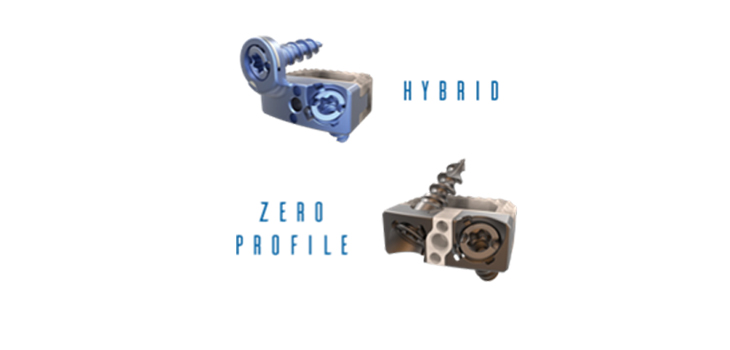
The system is available in two configurations, Zero Profile and Hybrid, both with 4° and 8° lordosis.
The Zero Profile, Stand Alone TOMCAT, according to the company, sits within the vertebral body “leaving the anterior cervical spine unchanged, which may reduce post–operative complications for good healing.”
The Hybrid, Stand Alone TOMCAT provides an “adaptable surgical solution when previous adjacent level treatment is present. Both devices provide an optimized fusion environment with large, center chambers for bone graft and HA-enhanced PEEK that provides early bone apposition.”
ChoiceSpine co-founders Rick Henson and Marty Altshuler said, “TOMCAT’s flexible design allows it to adapt to complex cervical anatomy providing spine surgeons with one solution to address multiple surgical challenges during ACDF procedures.”
ChoiceSpine is privately held and was founded in 2006.
Author
React:
Discussion
This is a fascinating development. In my practice we've seen similar outcomes with the revised protocol. The key differentiator seems to be patient selection criteria. Has anyone else noticed the correlation with BMI thresholds?
Great point. I'd push back slightly on the conclusion, the sample size in the cited study is too small to draw population-level inferences. That said, the directional signal is compelling and worth a larger RCT.
We implemented a similar approach last year. Early results are promising but we're still gathering 12-month follow-up data. Happy to share our protocol if anyone is interested.
Join the conversation
Orthopedic professionals are discussing this. Sign in and upgrade to read every comment and add your voice.