
Adil Samad, M.D., an orthopedic spine surgeon specializing in scoliosis, complex revisions and adult spinal reconstruction cases, has joined Florida Orthopaedic Institute (FOI) in Tampa Bay.
Adil Samad, M.D. Joins Florida Orthopaedic Institute
1 min read Premium comments
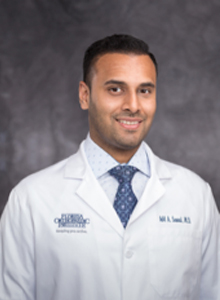
#adilsamad
“We are pleased to welcome such a talented physician to Florida Orthopaedic Institute and the Tampa Bay community,” said Roy Sanders, M.D., president of FOI, in the organization’s August 29, 2017 news release. “Dr. Samad’s training in adult spinal surgery and his use of the most advanced surgical techniques will be a great asset to our team and the patients he serves.”
Dr. Samad received his medical degree from the School of Medicine and Health Sciences at The George Washington University in Washington, D.C. He then went on to a residency at Monmouth Medical Center in Long Branch, New Jersey, where he earned the Medical Staff Award for Overall Excellence, and twice earned the F & J Award for Excellence in Scholarly Activity. Dr. Samad completed an adult spine surgery fellowship training the Johns Hopkins University in Baltimore, Maryland. He is board eligible by the American Board of Orthopedic Surgery.
Dr. Samad has co-authored multiple publications and book chapters and has served as a speaker at national meetings on degenerative conditions of the spine.
Dr. Samad told OTW, “I chose to specialize in spine surgery to improve my patients’ quality of life and have a special interest in degenerative conditions, scoliosis, complex revisions, and adult spinal reconstruction cases. The most rewarding aspect of my work is playing an integral part in my patients’ life changing and emotional experiences, allowing them to return to the activities they enjoy. I’m looking forward to joining an elite team of spine surgeons offering the latest advancements in state-of-the-art spine surgery as well as 40 other surgeons with exceptional expertise in every orthopedic specialty.”
Author
React:
Discussion
This is a fascinating development. In my practice we've seen similar outcomes with the revised protocol. The key differentiator seems to be patient selection criteria. Has anyone else noticed the correlation with BMI thresholds?
Great point. I'd push back slightly on the conclusion, the sample size in the cited study is too small to draw population-level inferences. That said, the directional signal is compelling and worth a larger RCT.
We implemented a similar approach last year. Early results are promising but we're still gathering 12-month follow-up data. Happy to share our protocol if anyone is interested.
Join the conversation
Orthopedic professionals are discussing this. Sign in and upgrade to read every comment and add your voice.