
Is it “back to the operating room” if you use barbed sutures in primary TKA (total knee arthroplasty)?
TKA Study: More Arthrotomy Failures With Barbed Sutures
2 min read Premium comments
Secondary
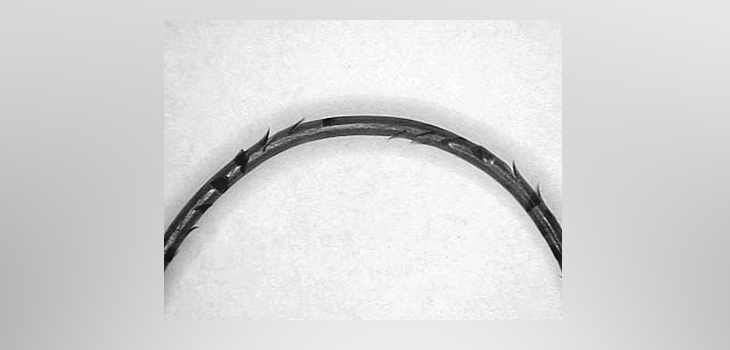
That’s what researchers from Dartmouth and the University of Texas at Austin sought to determine. The research, “Are Barbed Sutures Associated With 90-day Reoperation Rates After Primary TKA?” appears in the August 11, 2017 edition of Clinical Orthopaedics and Related Research.
Benjamin J. Keeney, M.D. co-author of the study and a member of the Department of Orthopaedics at Dartmouth-Hitchcock Medical Center in Lebanon, New Hampshire, told OTW, “This issue has been discussed extensively among our surgical staff and we were quite interested in it from research and policy perspectives.”
“Many surgeons have adopted barbed sutures in recent years based on theoretical advantages, faster closures, and potential cost savings. We recognized an opportunity at our institution, through our surgical counts and surgeon preference variance, to contribute to the wider knowledge base around this issue.”
“We utilized our institutional database repository, which includes prospective electronic medical recorded (EMR) data and patient-reported outcome measures. This provided very large counts for this type of research, including suture information on 2,482 operated knees among 1,887 individual patients.
Regarding the results, Dr. Keeney told OTW, “We found that barbed sutures were not associated with 90-day reoperation (OR 1.70, 95% CI 0.82-3.53, p=0.156) or wound-related 90-day reoperation (OR 2.73, 95% CI 0.97-7.69, p=0.058). However, there was a difference in the rates of arthrotomy failure between the barbed suture (5 of 884; 0.6%) compared to the traditional suture cohort (0 of 1,598, 0%) (p=0.003).”
“There were no differences in TKA 90-day reoperation rate by suture type. However, there was enough evidence that our field should investigate barbed sutures further, most likely using large-scale multicenter trials. Using our calculations in the paper, we do not believe a single institution will have the appropriate surgical counts to investigate this for many more years.”
“Although we saw no difference in overall and wound-related 90-day TKA reoperation rates by suture type, we observed a higher rate of arthrotomy failures when barbed sutures are used for arthrotomy closure. While this does not necessarily settle the debate between traditional and barbed sutures, it does highlight a potential issue and should be investigated further in multicenter cohorts.”
Author
React:
Discussion
This is a fascinating development. In my practice we've seen similar outcomes with the revised protocol. The key differentiator seems to be patient selection criteria. Has anyone else noticed the correlation with BMI thresholds?
Great point. I'd push back slightly on the conclusion, the sample size in the cited study is too small to draw population-level inferences. That said, the directional signal is compelling and worth a larger RCT.
We implemented a similar approach last year. Early results are promising but we're still gathering 12-month follow-up data. Happy to share our protocol if anyone is interested.
Join the conversation
Orthopedic professionals are discussing this. Sign in and upgrade to read every comment and add your voice.