
Thomas Wickiewicz, M.D., an orthopedic surgeon at Hospital for Special Surgery (HSS), has been inducted into the American Orthopaedic Society for Sports Medicine’s (AOSSM) Hall of Fame. The event occurred at the Society’s Annual Meeting in Toronto, Canada.
Thomas Wickiewicz, M.D. Inducted Into AOSSM Hall of Fame
1 min read Premium comments
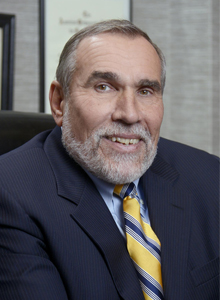
#thomasWickiewicz
As HSS indicated in its July 21, 2017 news release, “A native of Jersey City, New Jersey, Dr. Wickiewicz was educated at Saint Peter’s Prep and Saint Peter’s College, and played linebacker for the college football team. He received his medical degree from New Jersey Medical School, completed his general surgery training at The New York Hospital, and residency at Hospital for Special Surgery (HSS) in New York City, NY. Additional training included a sports medicine fellowship with John Marshall, M.D. at HSS, and a second year observing Frank Jobe, M.D. at the Kerlan-Jobe Clinic. He also spent time with V. Reggie Edgerton at UCLA’s Department of Kinesiology, where he assisted with research on human muscle.”
“Dr. Wickiewicz has practiced at HSS for 35 years. He is a professor of clinical surgery (orthopaedics) at Weill-Cornell Medical College, and attending surgeon at New York-Presbyterian Hospital. He served as Chief of Sports Medicine at HSS from 1993-2005. During his time at HSS, he educated more than 164 sports fellows, countless residents, and medical students.”
Asked about his experiences as an educator, Dr. Wickiewicz told OTW, “Education of residents and fellows happens one student at a time. Although all students are different, just like other people, as the teacher, all the experiences are outstanding for me. It may sound trite, but it is absolutely true. Some interactions are easy, some frustrating, some exasperating, but all, in their own way, are outstanding.”
Author
React:
Discussion
This is a fascinating development. In my practice we've seen similar outcomes with the revised protocol. The key differentiator seems to be patient selection criteria. Has anyone else noticed the correlation with BMI thresholds?
Great point. I'd push back slightly on the conclusion, the sample size in the cited study is too small to draw population-level inferences. That said, the directional signal is compelling and worth a larger RCT.
We implemented a similar approach last year. Early results are promising but we're still gathering 12-month follow-up data. Happy to share our protocol if anyone is interested.
Join the conversation
Orthopedic professionals are discussing this. Sign in and upgrade to read every comment and add your voice.