
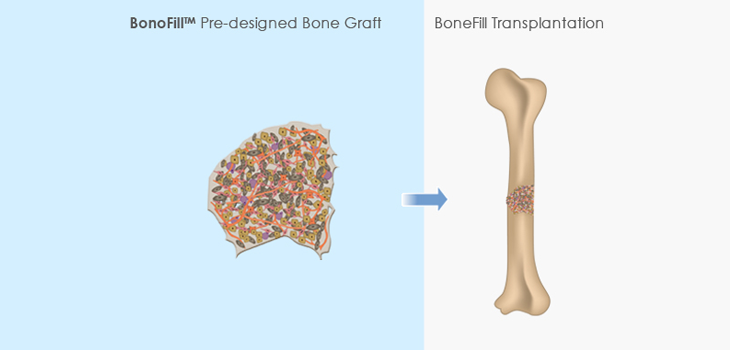
An August 17, 2017 Bonus BioGroup Ltd press release announces what is claimed to be a world first, an Israeli man received laboratory-grown semi-liquid bone tissue injected in his arm. The human bone tissue had been grown in a laboratory from the 40-year-old patient’s own fat cells.
Liquid Bone Injected in World First Treatment
1 min read Premium comments
Secondary
The procedure was performed at Emek Medical Center in Afula and was part of an early-stage clinical trial of a tissue-engineering technology developed by Bonus BioGroup Ltd of Haifa.
The patient had suffered significant bone loss in his arm as the result of a car accident and had previously undergone several unsuccessful surgeries.
In December 2016, Bonus BioGroup announced successful results of an early-stage clinical trial on 11 patients in which bone tissue grown from a small sample of each patient’s own fat cells was injected into their jaws to repair bone loss. According to the company, over a few months the tissue merged with the existing bone to complete the jaw.
Bonus BioGroup CEO and President Shai Meretzki said this experimental procedure “sets a new standard of hope for rapid healing in a wide variety of cases.”
Author
React:
Discussion
This is a fascinating development. In my practice we've seen similar outcomes with the revised protocol. The key differentiator seems to be patient selection criteria. Has anyone else noticed the correlation with BMI thresholds?
Great point. I'd push back slightly on the conclusion, the sample size in the cited study is too small to draw population-level inferences. That said, the directional signal is compelling and worth a larger RCT.
We implemented a similar approach last year. Early results are promising but we're still gathering 12-month follow-up data. Happy to share our protocol if anyone is interested.
Join the conversation
Orthopedic professionals are discussing this. Sign in and upgrade to read every comment and add your voice.