
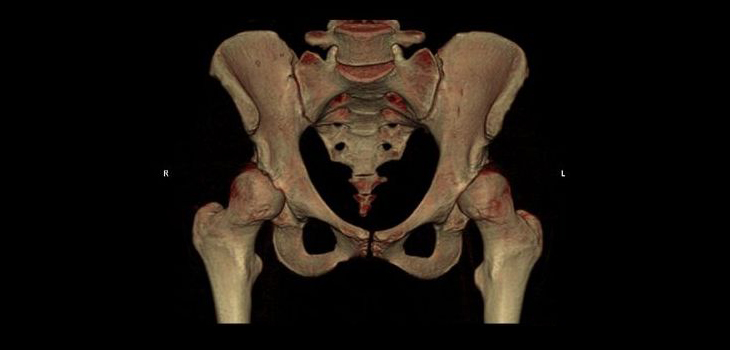
Arthroscopy…approach with caution in any hip dysplasia patients, advises a new study appearing in the July 31, 2017 edition of the Orthopaedic Journal of Sports Medicine.
Hip Dysplasia and Arthroscopy…Approach With Caution
2 min read Premium comments
Secondary
The work, “Multi-centered Comparison of Patient Reported Outcomes After Hip Arthroscopy Alone versus Combined Hip Arthroscopy and Peri-acetabular Osteotomy in Patients with Acetabular Dysplasia,” reported prospective data on 91 patients who underwent hip arthroscopy and 34 patients treated with a combination of hip arthroscopy and peri-acetabular osteotomy (HA/PAO).
Benjamin G. Domb, M.D., medical director of the American Hip Institute and a co-author on the study, told OTW, “Patients with dysplasia present a unique challenge in the field of hip preservation. The dysplasia, or shallow acetabulum, predisposes patients to tears of the labrum, cartilage damage, and arthritis at a young age. The gold standard of treatment for dysplasia remains periacetabular osteotomy, or PAO. Hip arthroscopy alone has historically yielded poor outcomes in this patient group.”
The authors wrote, “Both cohorts had significant improvement in all PRO [patient reported outcome] measures at 1 and 2 years when compared to pre-operative PRO measures. Combined HA/PAO patients had significantly lower mHHS [Modified Harris Hip Score] and HOS [Hip Outcome Score] ADL [Activity of Daily Living] pre-operatively; NAHS [Non-Arthritic Hip Score] approached significance.”
“HOS Sports and Pain VAS [Visual Analog Score] had no significant pre-operative differences between groups. At 3 months, the HA/PAO patients had significantly lower mHHS, HOS ADL and HOS Sports, while again NAHS approached significance. There was no significant difference in Pain VAS at 3 months. At 2 years, outcomes were comparable.”
Dr. Domb told OTW, “Over the last decade, two surgical approaches have been developed by our group for treatment of patients with dysplasia: 1. concomitant PAO and hip arthroscopy; 2. hip arthroscopy with labral repair or reconstruction and capsular plication. As we work to refine the indications for each of the approaches above, the present study was timely in order to compare the two approaches.”
“And at present, we believe that the gold standard approach for patients with frank dysplasia, center edge angle less than 20°, is concomitant PAO and hip arthroscopy. For patients with borderline dysplasia, we believe it is possible in experienced hands to achieve stability without osteotomy, using arthroscopic capsular plication and labral repair or reconstruction. In cases where excess femoral anteversion contributes to micro-instability, femoral osteotomy should be considered.”
“The surgeon should take a very cautious approach toward any patient with dysplasia, borderline dysplasia, or instability of the hip. Particularly in considering arthroscopy, if the static stabilizers of the hip are compromised, they must be repaired or augmented to avoid acceleration of degeneration or arthritis after arthroscopy. Patients with these conditions should be treated at a center where all surgical options, both open an arthroscopic, can be considered and offered.”
Author
React:
Discussion
This is a fascinating development. In my practice we've seen similar outcomes with the revised protocol. The key differentiator seems to be patient selection criteria. Has anyone else noticed the correlation with BMI thresholds?
Great point. I'd push back slightly on the conclusion, the sample size in the cited study is too small to draw population-level inferences. That said, the directional signal is compelling and worth a larger RCT.
We implemented a similar approach last year. Early results are promising but we're still gathering 12-month follow-up data. Happy to share our protocol if anyone is interested.
Join the conversation
Orthopedic professionals are discussing this. Sign in and upgrade to read every comment and add your voice.