
Formus Labs, a spin-out company of Auckland Engineering Institute, is pioneering a cloud-based, custom orthopedic program that it claims will significantly cut waiting times for joint replacements. “Our goal is to bring costs down and make patient-matched orthopaedics more accessible by giving surgeons something very easy to use,” said Ju Zhang, Ph.D., company founder and chief architect.
Australian Firm Makes Implants in the Cloud
1 min read Premium comments
Secondary
Patient-matched joint-replacement has been an increasingly popular option in New Zealand where 10,000 hip replacements are performed per year.
Researchers with skills in building statistical and computer models partnered with Christchurch custom orthopedics company Ossis in 2014.
“We used novel algorithms to analyze people’s bodies and then looked at how the shapes of bones differed between populations,” said Zhang.
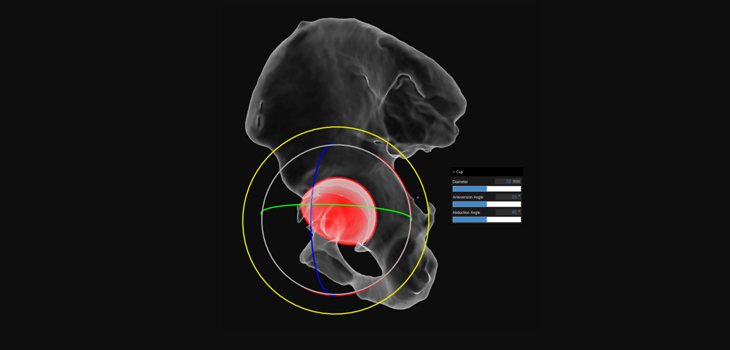
“From this, patient anatomy and optimized prosthesis designs could be calculated. Our technology means a patient a can have a CT-scan or X-ray of their joint (hip, knee, spinal). This is then uploaded to our platform and a draft design of a perfectly-fitting custom titanium implant is quickly calculated and presented as a 3D, fully adjustable model.”
He says that the automatically generated design is fully customizable by both surgeon and engineer anywhere, at any-time, on any modern computer system or browser.
Author
React:
Discussion
This is a fascinating development. In my practice we've seen similar outcomes with the revised protocol. The key differentiator seems to be patient selection criteria. Has anyone else noticed the correlation with BMI thresholds?
Great point. I'd push back slightly on the conclusion, the sample size in the cited study is too small to draw population-level inferences. That said, the directional signal is compelling and worth a larger RCT.
We implemented a similar approach last year. Early results are promising but we're still gathering 12-month follow-up data. Happy to share our protocol if anyone is interested.
Join the conversation
Orthopedic professionals are discussing this. Sign in and upgrade to read every comment and add your voice.