
The headline across four column of the Sunday New York Times was dramatic. “The patient wants to leave,” it read. “The hospital says No Way.” More than 50,000 elderly Americans can relate to that headline. Why? Because every one of them, this year, left a hospital or emergency room AMA—Against Medical Advice.
A Prisoner or a Patient? Hospitals Overreact to Safety Concerns
5 min read Premium comments
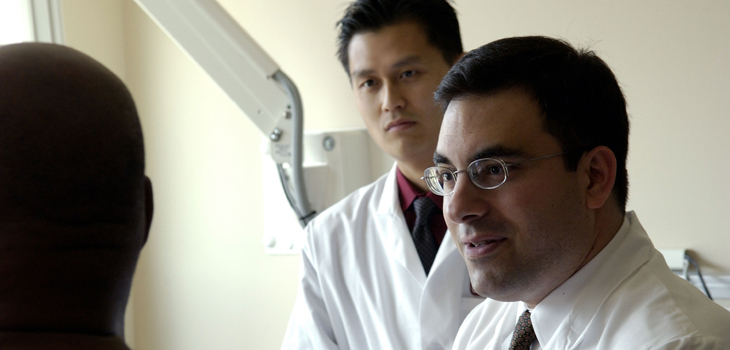
Some cases were similar to William Callahan’s, an 82-year-old man who nearly fainted while on a walk down the sidewalk to visit a friend. He ended up in a hospital emergency room. His physician daughter, Dr. Eileen Callahan, found her father recovered and being attended by a doctor who insisted on keeping the elderly man in the hospital for the night for observation.
Though she knew this was a bad idea, Eileen consented. Her father ended up pacing the floor for much of the night, tearing off the heart monitors and becoming increasingly confused and agitated. The next day Eileen asked the attending doctor to discharge her father and let her take him home. He refused. So she signed the AMA form that hospitals require before releasing patients against physicians’ recommendations.
Once home, Callahan went to sleep. His daughter was furious. “This was cookbook medicine, done without thinking,” she said.
“It was very adversarial.”
This Writer’s Experience
I agree with Eileen, because something similar happened to me.
The day after the Fourth of July as I was racing to answer a ringing phone I stumbled and fell against the edge of my kitchen counter. The sharp counter collided painfully with my ribs. After enduring the pain for 24 hours I decided to visit the emergency room of Regions Hospital in St Paul, Minnesota. If you’ve ever bruised your ribs, you know how painful they are and how, with every breath, you feel the sharp pang. Had I damaged a rib?
So, off to Regions Hospital in St. Paul, Minnesota I went.
Regions is a teaching hospital and part of the HealthPartner’s chain. It has won many awards over the years and is routinely recognized by US News and World Reports as one of America’s best hospitals. Not only that, but I’ve served as a fundraiser for Regions and a member of the Board of Trustees.
I’m a big fan of this excellent institution. Or I was.
The ER staff took an X-ray. There was good news and there was bad news.
The good news was that my ribs, while painful, were just fine.
The bad news was that I had three blood clots in my right lung. It was an inadvertent discovery.
A Region’s young doctor sat down with me and explained that they wanted to admit me to the hospital immediately, that the death rate from pulmonary embolisms was high (30%) and I must treat it very seriously.
To put this in context, I’m 90 years old and, aside from a couple bruised ribs, am in excellent health for my age.
My response to the news was to bring up a practical problem. I told this young doctor I had to go home to take care of a pet dog who had now been left untended for the seven hours I’d been in the ER, having an X-ray and waiting for the doctor.
I also told him that I needed to consult my calendar because I was missing meetings while I was waylaid in the ER.
Could I go home, take care of my affairs and return to the hospital in the morning?
No.
He would not hear of it. I insisted and we finally compromised to a one-hour break from the ER—time enough for me to return home, collect my toothbrush, find a dog sitter, and return.
A Prisoner, Not a Patient
And so I returned.
The hospital booked me into a room for the night—which I spent with an automatic blood pressure cuff taking my blood pressure every 30 minutes and a clip on the end of one finger measuring my oxygen level. All night.
At 8:00am the next morning the staff took a scan of my heart.
At 10:00am my son, Richard, a Family Nurse Practitioner with a clinic in New Hampshire, walked into the room.
At 10:30am the doctor arrived to discuss my test results.
All my numbers were good—heart, lungs, blood pressure—everything was fine.
The doctor outlined a course of treatment for my newly discovered blood clots. He put me on a course of blood thinners and then also said that he wanted to order a scan of my legs to see if he could detect the source of the blood clots.
I asked when the leg scan might take place. Not until after 6pm that evening, he replied.
So I asked to be discharged on the guarantee that I would return in time for the scan.
No, he said. And with that he left the room.
In the company of my son I now began six hours as prisoner of the hospital. Every hour we made trips to the nurse’s station to ask if discharge papers were being prepared (they were not).
Had the blood thinner drug I had to take that evening that was available only from the hospital pharmacy arrived?
No, it had not.
When I told a nurse that I was ready to walk out and go home to tend to my affairs she told me that my insurance would not cover my stay at the hospital if I did that.
That line, in fact, is surprisingly common in cases where elderly patients are trying to leave the hospital against the advice of doctors. It is also untrue.
We continued to argue that the agreed upon course of treatment for my blood clots would be unaffected by whatever outcome the leg scan would offer—and when it was close to 6pm—we were sprung loose.
Dr. Cordelia Stearns, a hospitalist and the lead author of the study that revealed the magnitude of the AMA problem said, “Reasonable people can disagree whether a patient needs to stay one more day for additional tests. Let’s see if we can come up with an alternative plan. A lot of the time we can. We are doctors, not jailers.”
What’s Going On?
Hospitals, health systems and physician groups throughout the United States have felt the impact of a risk/reward paradigm shift.
Increasingly providers are reimbursed according to alternative payment models which are based on a compilation of quality measures like readmission rates or infection rates and so forth. A hospital’s Medicare revenue would be affected by as much as 4% in 2019, the first year the payment changes take effect, and increase to up to 9% in later years depending on such factors.
For elderly patients in particular, this may be having the unintended effect of forcing us to stay in a hospital against our will and, as I experienced, under the bogus threat of having no insurance coverage—simply to protect the hospital from being tagged for subpar performance.
I echo Dr. Stearns suggestions that it is time for an alternative plan. Doctors are not jailers, no matter what the latest reimbursement scheme might be.
Author
React:
Discussion
This is a fascinating development. In my practice we've seen similar outcomes with the revised protocol. The key differentiator seems to be patient selection criteria. Has anyone else noticed the correlation with BMI thresholds?
Great point. I'd push back slightly on the conclusion, the sample size in the cited study is too small to draw population-level inferences. That said, the directional signal is compelling and worth a larger RCT.
We implemented a similar approach last year. Early results are promising but we're still gathering 12-month follow-up data. Happy to share our protocol if anyone is interested.
Join the conversation
Orthopedic professionals are discussing this. Sign in and upgrade to read every comment and add your voice.